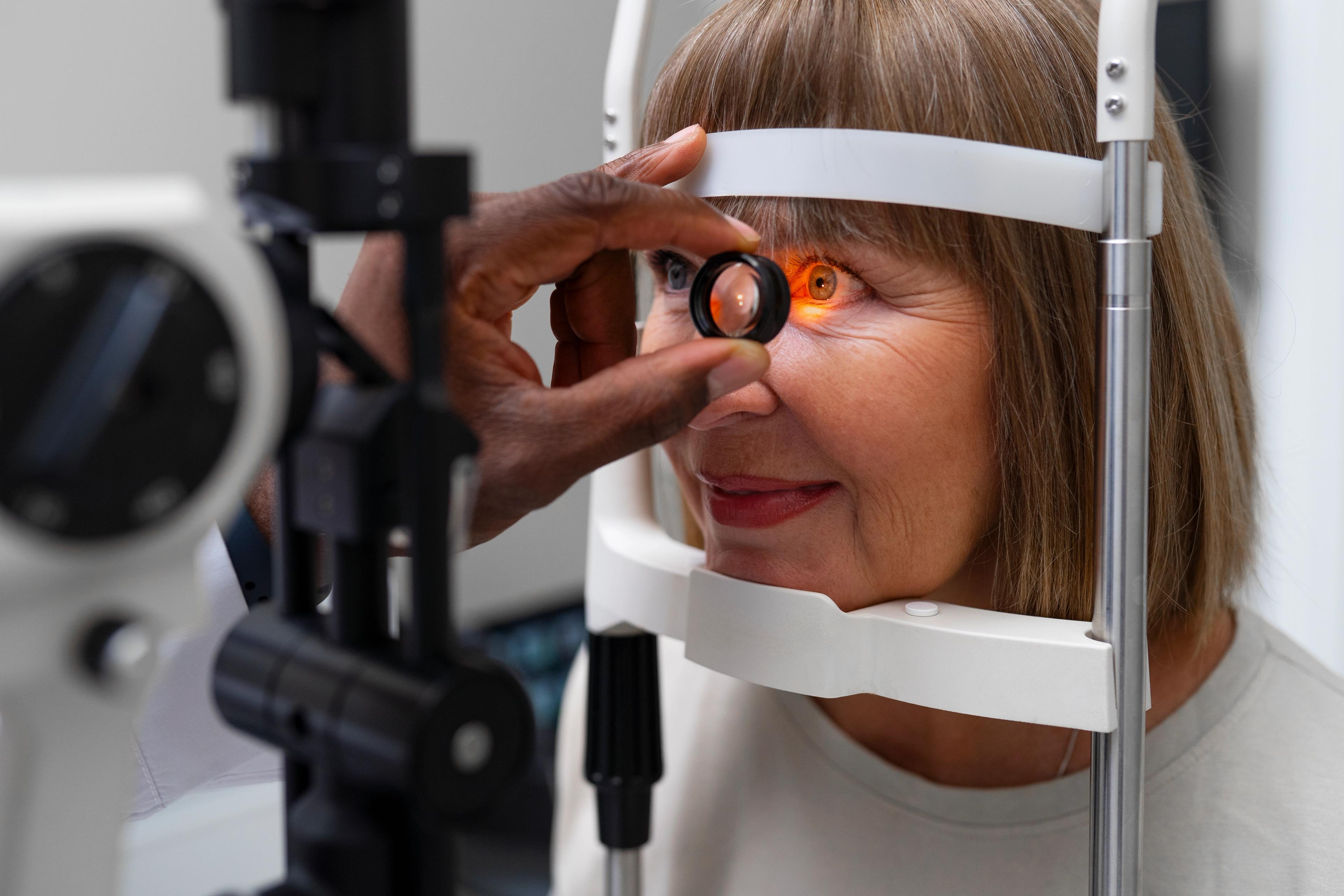

Looking for treatment options for diabetic retinopathy?
Browse open diabetic retinopathy clinical trials near you! We'll handle the follow-up.
How diabetic retinopathy is treated right now
Treatment generally falls into three groups, depending on how advanced the condition is.
Eye injections that stop abnormal blood vessels from growing. A group of medications called anti-VEGF drugs, including ranibizumab, aflibercept, a stronger version called Eylea HD, and faricimab, work by blocking a protein that causes leaky, unhealthy blood vessels to form in the retina. There are also lower-cost versions of aflibercept now available, including one approved as recently as October 2025, which are making this treatment more affordable and accessible.
Steroid implants. Sometimes swelling in the eye doesn't get better with injections alone. In those cases, doctors can place a tiny implant in the eye that slowly releases a steroid over several months to bring down inflammation and swelling.
Laser treatment and surgery. For more advanced cases, laser treatment can seal off blood vessels that are leaking or growing abnormally. And if there's bleeding inside the eye that isn't clearing up on its own, a surgery called a vitrectomy can be used to remove it.
What researchers are studying now
Researchers are working on new treatments that could mean far fewer trips in for injections. One promising option is a type of gene therapy called sura-vec, given as a single injection in the eye. In an early trial, more than half of the people who got it saw real improvement in their diabetic retinopathy, and that improvement was still holding up two and a half years later, without needing any more treatment. Most people in the study also didn't have any serious vision problems during that time. It's now being tested in a larger trial to see if those results hold up in more people.
AI tools are also getting better at spotting diabetic retinopathy in eye scans, and in recent studies, they've come close to matching how accurately an eye specialist can read the same images, which could make it easier for more people to get screened.
Why diabetic retinopathy develops
Diabetic retinopathy happens because of how long someone has had diabetes and how their blood sugar has behaved over that whole time, not one bad decision. Even people who manage their diabetes really carefully can still develop it, because it comes from years of small effects on tiny blood vessels. That's exactly why catching it early with regular eye exams matters so much.
How to find a diabetic retinopathy study
You can search diabetic retinopathy studies on our platform, filter by location, and see whether you meet the basic criteria before applying. The process usually takes a few minutes, and a coordinator follows up afterward to walk you through next steps.
For example, a Phase 1 trial from Roche is currently recruiting adults with diabetic retinopathy to test a new investigational eye injection.
Common questions
What is diabetic retinopathy? Diabetic retinopathy is an eye condition that happens when blood sugar stays high for a long time and damages the tiny blood vessels in the retina, the part of the eye that senses light. It's closely tied to diabetes, and it often doesn't cause any noticeable symptoms early on, which is a big reason regular eye exams matter so much for anyone managing diabetes.
Can diabetic retinopathy be reversed? Sometimes, in the early stages, things can improve with better blood sugar control. But once the damage is more advanced, it usually can't be undone, which is exactly why catching it early with regular eye exams makes such a big difference.
What's the first sign of diabetic retinopathy? Usually, there isn't one. Early diabetic retinopathy often causes no symptoms you'd notice, which is why regular eye exams matter even when your vision feels totally fine.
What's the difference between the early and advanced stages? In the early stage, the blood vessels in the eye get damaged and start to leak or swell. In the more advanced stage, the eye starts growing fragile, abnormal blood vessels to make up for the damage, and those are the ones most likely to bleed or cause more serious vision problems.
See diabetic retinopathy clinical trials recruiting near you:
Diabetic Retinopathy Clinical Trials