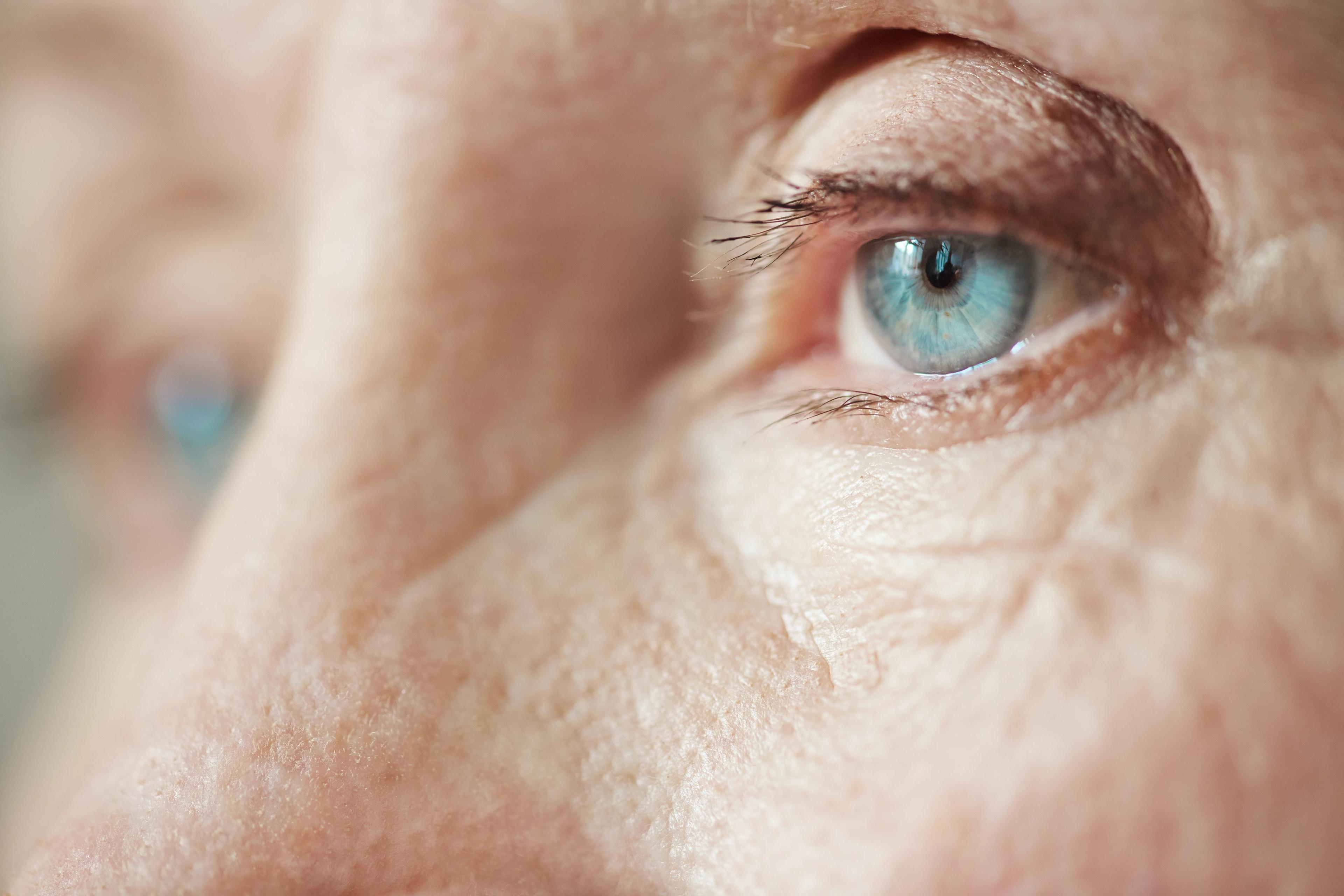

Unfortunately, there is no cure for glaucoma, and vision that is already lost does not come back. About half of the people who have glaucoma do not even know it yet, because the early disease is silent. That sounds grim, but the treatment picture is better than most people expect. Every approved treatment works on the same proven target, lowering the pressure inside the eye, and doing that can slow the disease down or stop it. And the toolbox has grown noticeably in the last few years. This article walks through what is approved today, what researchers are testing right now, and why some answers in this field take so long to arrive.
Looking for treatment options for glaucoma?
Browse open glaucoma clinical trials near you! We'll handle the follow-up.
What is approved today
All approved glaucoma treatments do one thing: they lower intraocular pressure, or IOP. That matters because lowering IOP is the only intervention proven to slow or halt the damage to the optic nerve. None of the approved options repairs the nerve or restores lost vision.
Eye drops
Drops are the backbone of glaucoma care, and there are six drug classes:
Prostaglandin analogs: latanoprost (Xalatan), bimatoprost (Lumigan), travoprost (Travatan Z), and tafluprost (Zioptan). A newer member, latanoprostene bunod (Vyzulta, approved in 2017), pairs the prostaglandin with a part that releases nitric oxide.
Rho kinase inhibitor: netarsudil (Rhopressa, approved in 2017), the first genuinely new drop class in years, followed by a fixed combination with latanoprost (Rocklatan) in 2019. Researchers are still working out what these two drops do beyond pressure, and a University of Maryland study recruiting now is measuring how netarsudil, latanoprost, and the combination affect blood flow in the eye, in 50 people with ocular hypertension or suspected glaucoma.
Beta-blockers such as timolol are among the oldest and still widely used. Alpha-agonists such as brimonidine work differently again, and carbonic anhydrase inhibitors, dorzolamide and brinzolamide as drops, acetazolamide as a pill, add another option. Cholinergics such as pilocarpine round out the list. Many people end up on more than one class, so fixed combination bottles exist too, like Cosopt, Combigan, and Simbrinza.
Implants that release medicine inside the eye
This is the newest branch of the family. Durysta, a small implant that releases bimatoprost, was approved in 2020. iDose TR, an implant that releases travoprost, was approved in December 2023. Both are placed inside the eye and free the patient from daily drops for a stretch of time. In January 2026 the FDA approved updated labeling for iDose TR that supports giving it again after the first one, which had been an open question.
Laser and surgery
Selective laser trabeculoplasty, a quick outpatient laser treatment, is increasingly used as a first treatment rather than a last resort. Minimally invasive glaucoma surgery devices, called MIGS, such as iStent and Hydrus, offer a middle ground. For advanced disease, the classic operations remain trabeculectomy and tube shunts. Surgeons are still refining the older operations too. Surgeons are still refining the older operations too. A Washington University trial in 152 patients compared two ways of handling the tube during glaucoma valve surgery, a detail that decides how fast pressure comes down after the operation.
There is one glaucoma emergency where treatment cannot wait. In angle-closure glaucoma, also called narrow-angle or acute glaucoma, the drainage angle closes off and pressure climbs fast. An attack brings intense eye pain, headache, nausea or vomiting, a red eye, sudden blurry vision, and rainbow-colored halos around lights. Untreated, it can cause blindness in just a few days, so those symptoms mean getting care immediately. Doctors treat an attack with laser and medicine that helps the fluid drain again. This form is the less common one in the US: 9 in 10 people with glaucoma here have the open-angle type, the slow and silent kind this article mostly describes.
How doctors test for glaucoma
Since the common form has no early symptoms, the test matters as much as the treatment. There is only one way to find out for sure, and that is a comprehensive dilated eye exam. Feeling fine proves nothing.
A complete glaucoma exam has several parts. The doctor measures the pressure inside the eye, inspects the drainage angle where fluid leaves, examines the optic nerve for signs of damage, and tests your peripheral vision with a visual field test, which is the part that shows whether side vision has started to go. The exam also usually includes a photograph or a computer measurement of the optic nerve, so future visits have something to compare against, and a measurement of corneal thickness, because the thickness of the cornea affects how pressure readings should be read.
That set of measurements is also what trials use to decide who fits. Eligibility criteria in glaucoma studies are written in the same language: a pressure range, a visual field score, an optic nerve finding.
What researchers are studying now
As of August 2026, more than 180 glaucoma studies are recruiting participants right now on AllClinicalTrials.com. Two things stand out about this pipeline.
First, it is unusually device heavy. Most of the recruiting glaucoma studies listed on our platform are surgical, device, or imaging studies rather than new drug trials, run by sponsors like Glaukos, SpyGlass Pharma, and Sanoculis alongside university hospitals like Duke, Stanford, and Massachusetts Eye and Ear. The field builds hardware as much as chemistry. That shows up in the phase mix too: a large share of the studies you can browse here are marked not applicable, the label used when a study is not testing a drug through the usual phase ladder, while genuine Phase 2 and Phase 3 drug trials are a small minority. Imaging is a big part of the picture, because a better view of the optic nerve means catching damage sooner. One University of Maryland imaging study is enrolling 150 people to test whether measuring blood flow at the back of the eye can tell doctors something eye pressure alone does not.
Second, the drug pipeline is producing real results. The most watched candidate is NCX-470 from Nicox, an eye drop that combines bimatoprost with a nitric oxide releasing part. In August 2025 Nicox announced that its second Phase 3 trial, called Denali, met its primary endpoint: the drop lowered eye pressure at least as well as latanoprost, the standard it was tested against, in people with open-angle glaucoma or ocular hypertension. That was the second successful pivotal trial for NCX-470 after Mont Blanc, which is the pattern the FDA typically wants to see before an approval. Earlier stage work is also moving, for example QLS-111 from Qlaris, a drop being studied for how it helps fluid drain out of the front of the eye.
And then there is the field's biggest unmet goal: neuroprotection. Every approved treatment lowers pressure. None of them protects the retinal ganglion cells, the nerve cells that glaucoma destroys, independently of pressure. Those cells are the reason vision loss is permanent, because once they are gone the eye has no way to grow them back. A drug that protected them would help the people who keep losing vision despite well controlled IOP, including many with normal-tension glaucoma, where pressure readings look fine and the nerve is damaged anyway. Researchers keep chasing it, but no neuroprotective agent has been approved so far.
Why glaucoma research takes time
The endpoint problem. Drug trials measure eye pressure in mmHg at fixed timepoints, because pressure responds within weeks. But pressure is a stand-in, a surrogate. What patients actually care about, keeping their visual field, changes so slowly that a trial built on vision outcomes takes years. So functional-outcome trials are rare and long, and most approvals rest on pressure numbers. Pressure is the one thing proven to change the course of the disease, so it is a defensible stand-in, but it does mean a new drop reaches the market with its effect on eyesight measured indirectly.
No placebo, on purpose. Leaving glaucoma untreated just to have a comparison group is generally considered unethical once the disease is real. So new drops are tested head to head against proven medicines like timolol or latanoprost. That is better for participants, and it raises the bar for what counts as progress: a candidate that lowers pressure well can still fail if the old drug lowers it just as well. You can see the design in the wild: a Phase 3 study enrolling 600 people with open-angle glaucoma or ocular hypertension, run by YS Life Science, is an active-controlled trial where neither group goes untreated.
The representation problem. A 2021 analysis in JAMA Network Open looked across randomized trials in open-angle glaucoma and found the participants were predominantly White, with Black and Hispanic patients underrepresented compared to how much of the disease they carry. The gap is hard to justify: Black adults are meaningfully more likely than White adults to have vision-affecting glaucoma, with some studies putting the gap at more than double. A 2025 study in Ophthalmic Epidemiology confirmed the pattern persists. Many current trials are trying to close this gap, which is one concrete reason participation from underrepresented communities matters.
Does glaucoma affect more than the eye
Glaucoma itself is not fatal. Its burden is disability. Vision loss from glaucoma is associated with loss of independence and with declines in overall health and wellbeing, and side vision is exactly the part of sight people rely on for moving through the world rather than for reading a page.
The disease also travels with other conditions. Diabetes and high blood pressure are among its established risk factors. Severe nearsightedness raises the risk. Long-term corticosteroid use can cause a secondary form of glaucoma. Age is the strongest factor of all: glaucoma usually shows up after 40 and becomes much more common with each decade after that. Race matters too, with Black and Hispanic or Latino adults carrying more of the disease.
If you have glaucoma alongside any of these conditions, or several of them run in your family, how they interact is a conversation worth having with your doctor.
Congenital glaucoma: when a baby is born with it
Glaucoma is not only a disease of later life. About 1 in 10,000 babies born in the United States have congenital glaucoma, a form present from birth, where the eye's drainage system did not develop normally.
Treatment is different too. Adult glaucoma usually starts with drops, while congenital glaucoma is typically handled surgically. According to the National Eye Institute, surgery works very well for it, and babies who get surgery early enough usually will not have any permanent vision loss. That is close to the opposite of the adult picture, where damage already done cannot be undone, and it is a reminder that timing is doing most of the work in this disease.
Common myths
"Glaucoma just means high eye pressure."
No. High pressure is the biggest risk factor, but some people have high pressure and never develop glaucoma (doctors call this ocular hypertension), and some people develop glaucoma at completely normal pressure. The disease is defined by damage to the optic nerve, not by a pressure number. This is not a technicality. It is why the eye exam looks at the nerve and the visual field, not just at the pressure reading.
"I would know if I had it."
You almost certainly would not, at least early on. Side vision fades first, slowly, and the brain fills in the missing parts. That is why about half of people with glaucoma are undiagnosed, and why most cases are caught during an eye exam rather than because something felt wrong.
"Treatment can bring my vision back."
It cannot, and anyone promising otherwise should be treated with suspicion. What treatment does is protect the vision you still have, by lowering eye pressure. That is why finding glaucoma early changes the story so much.
"Glaucoma and cataracts are basically the same thing."
They are not, though both become more common with age and plenty of people have both. A cataract is a cloudy area in the lens, the clear part at the front of the eye that focuses light. Glaucoma is damage to the nerve at the back. The outcomes differ as much as the anatomy: surgeons can remove a clouded lens and replace it with an artificial one, and 9 out of 10 people who get cataract surgery see better afterwards. No operation gives back what glaucoma has taken.
"It only happens to old people."
Age is the biggest risk factor, but congenital glaucoma is present from birth, and long-term steroid use can cause a secondary form at any age.
The stages of glaucoma and what care usually looks like
Doctors commonly grade open-angle glaucoma as mild, moderate, or severe, based on how much damage shows on visual field testing. The stage shapes what typical care looks like, though every plan is individual.
Mild. The optic nerve shows changes but the visual field is still normal or nearly so. Most people at this stage feel nothing at all and were found on a routine exam. Care usually means drops, and increasingly selective laser trabeculoplasty as a first option instead of a bottle. Monitoring matters as much as treating here, because the point of catching it early is to keep this stage from becoming the next one.
Moderate. The visual field shows clear loss, often as patches in the side vision that the person still does not notice day to day. Care often means combining medicines, adding laser, or considering a MIGS procedure, and visits get more frequent so that any further loss shows up on the field test rather than in daily life.
Severe. Field loss is widespread and can threaten central vision, the part used for reading and faces. This is the territory of trabeculectomy and tube shunts, the bigger operations that create a new path for fluid to leave the eye.
Clinical trials lean on this staging for eligibility. A drop study may want mild to moderate disease, a surgical study may want people who already need an operation, and some studies enroll only glaucoma suspects or people with ocular hypertension, meaning high pressure with no nerve damage yet. Knowing your stage tells you which studies fit you.
How to find a glaucoma study
AllClinicalTrials.com lists recruiting glaucoma studies across the US, from new drops and implants to imaging and surgical studies. You can filter by city and state, read what each study involves in plain language, and apply in about 5 minutes, whether that's a Massachusetts Eye and Ear trial comparing two MIGS approaches or an MCPHS University study looking at whether occupational therapy support helps people manage their eye drop routine. The study team then contacts you, explains everything during informed consent, and only after that do you decide.
Common questions
What is glaucoma, in simple terms? Glaucoma is a group of eye diseases that wear down the nerve linking your eye to your brain. Fluid pressure inside the eye is usually part of the story, though the disease can also develop when that pressure reads normal. Damage starts at the edges of your sight and creeps inward, so most people feel nothing until a fair amount of vision is already gone.
Is glaucoma hereditary? Often, yes. Family history is one of the strongest risk factors, and having a parent or sibling with glaucoma raises your risk several times over. If glaucoma runs in your family, tell your eye doctor.
What is angle-closure glaucoma? Angle-closure glaucoma, also called narrow-angle or acute glaucoma, is the form that can strike suddenly. An attack is hard to miss: intense eye pain, headache, nausea or vomiting, a red eye, sudden blurry vision, and rainbow-colored halos around lights. It is a medical emergency. Untreated, it can cause blindness in just a few days, so symptoms like these mean getting medical care right away. Doctors treat an attack with laser and medicine that helps the fluid drain. It is also the less common form: 9 in 10 people with glaucoma in the US have the open-angle type.
Glaucoma vs cataracts: what is the difference? Both become more common with age, but they are different problems in different parts of the eye. A cataract is a cloudy area in the lens, the clear part of the eye that helps focus light. Glaucoma is damage to the nerve at the back of the eye. The treatment picture differs too: surgeons can remove a cloudy lens and replace it with an artificial one, and 9 out of 10 people who get cataract surgery see better afterwards. No operation restores what glaucoma has taken. Cataracts are also extremely common late in life: more than half of Americans age 80 or older either have them or have had surgery to remove them.
How do doctors test for glaucoma? There is only one way to know for sure: a comprehensive dilated eye exam. Feeling fine does not rule glaucoma out, because the early disease usually has no symptoms. During a complete exam the doctor measures your eye pressure, inspects the drainage angle, examines the optic nerve for damage, tests your side vision, takes a picture or computer measurement of the nerve, and measures the thickness of your cornea.
See glaucoma clinical trials recruiting now.
Browse recruiting studies, check which ones fit your stage and treatment history, and apply in about 5 minutes: Glaucoma Clinical Trials