

Keytruda (pembrolizumab) is an immunotherapy used for many types of cancer, and most people who take it have side effects that are mild or manageable. But because Keytruda works through the immune system, its side effects are different from chemotherapy: the immune system can sometimes attack healthy organs, such as the thyroid, lungs, bowel, or liver, and this can happen weeks or even months into treatment, or after it ends. This guide explains the common and serious side effects listed in the official prescribing information, when they usually start and how long they last, which warning signs need a call to your care team, and what your options are if Keytruda stops working.
Cancer growing despite immunotherapy?
Many clinical trials are testing what comes next after Keytruda and other immunotherapies, from new drug combinations to cell and vaccine therapies. Search studies near you and apply in about 5 minutes.
What Keytruda is and how it works
Keytruda is an immunotherapy called a PD-1 inhibitor. Cancer cells often switch off the immune system’s attack by using a brake called PD-1. Keytruda releases that brake, so the immune system can recognize and fight the cancer. It is used for many types of cancer, including lung cancer, melanoma, head and neck cancer, kidney and bladder cancer, and triple negative breast cancer, either on its own or with chemotherapy or other medicines.
Keytruda is usually given as an infusion into a vein every 3 or 6 weeks. A version given as an injection under the skin, Keytruda Qlex, was approved in September 2025 for most of the same solid tumor uses; it contains the same medicine and has a similar side effect profile.
The most common Keytruda side effects
When Keytruda is given on its own, the side effects reported in at least 1 in 5 people in clinical trials were tiredness, muscle and joint pain, decreased appetite, itching, diarrhea, nausea, rash, fever, cough, shortness of breath, constipation, pain, and belly pain. When it is combined with chemotherapy, many people also have the familiar chemotherapy side effects, such as hair loss, vomiting, and numbness or tingling in the hands and feet.
Most of these are mild to moderate and can be managed. Tiredness is the most common, and it often comes and goes over the course of treatment.
Immune-related side effects: what makes Keytruda different
Because Keytruda takes the brakes off the immune system, the immune system can sometimes attack healthy tissue. Doctors call these immune-related or immune-mediated side effects. They can affect almost any organ, and while most are mild and treatable, some can be serious if they are not caught early.
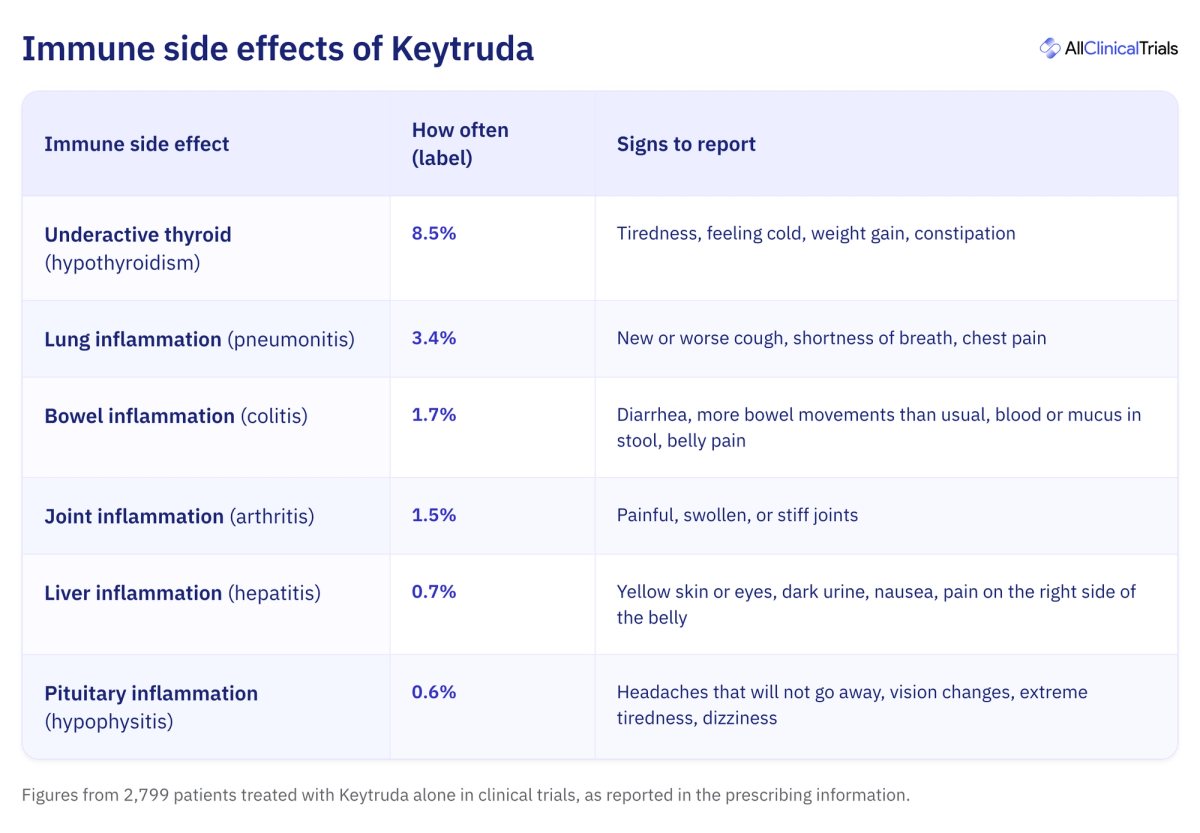
Rarer immune side effects include inflammation of the kidneys, heart, muscles, nerves, eyes, or pancreas, type 1 diabetes, and severe skin reactions. Pneumonitis is more common in people who have had radiation to the chest. Your care team checks your blood regularly, including thyroid and liver tests, to catch problems early.
Keytruda rash and itching
Skin side effects are among the most common: rash and itching each affect many people taking Keytruda. Most rashes are mild and can be treated with moisturizers, anti-itch medicines, or steroid creams, and treatment usually continues. Rarely, Keytruda can cause severe skin reactions, such as blistering, peeling skin, or painful sores in the mouth, eyes, or genitals, which need urgent medical attention.
Keytruda side effects timeline: when do they start?
Side effects can begin at any time. Some, such as tiredness or an infusion reaction, can appear in the first days or weeks. Immune-related side effects most often appear within the first few months: in early clinical trials, thyroid problems, pneumonitis, and colitis typically started around three months into treatment, but they were reported anywhere from a few days to more than a year and a half after starting.
Importantly, immune side effects can also appear after you stop Keytruda, sometimes months later. Tell any doctor you see that you have had immunotherapy, even if your treatment has finished.
How long do Keytruda side effects last?
It depends on the side effect. Many immune-related side effects improve once they are treated, often with steroids and a pause in Keytruda. In the prescribing information, colitis resolved in about 85 percent of the people who had it, and pneumonitis in about 59 percent. Some effects, however, are usually permanent: an underactive thyroid resolved in only about 20 percent of people, so most need to take a daily thyroid hormone pill, often for life. Hormone problems caused by inflammation of the pituitary or adrenal glands, and type 1 diabetes, are also usually lifelong and managed with medicine.
Having an immune side effect does not necessarily mean stopping Keytruda for good. Depending on how severe it is, your oncologist may pause treatment, treat the side effect, and restart, or switch to another treatment.
When to call your care team
Call your oncology team promptly if you notice: a new or worsening cough or shortness of breath; diarrhea or more bowel movements than usual, especially with blood, mucus, or belly pain; yellow skin or eyes or dark urine; severe tiredness, dizziness, or headaches that will not go away; a rash that is spreading, blistering, or peeling; muscle weakness or numbness; chest pain or a racing heart; or being very thirsty and urinating much more than usual. Do not treat these on your own with over-the-counter medicines: immune side effects need specific treatment, and early treatment is usually quicker and more effective.
How Keytruda side effects are treated
Mild side effects are often managed while treatment continues. For moderate or severe immune side effects, the usual approach is to pause Keytruda and start steroids, such as prednisone, which calm the immune system; the dose is then reduced slowly over several weeks. If steroids are not enough, other medicines that suppress the immune system may be used. Hormone problems, such as an underactive thyroid, are treated by replacing the missing hormone.
When Keytruda stops working
Keytruda can control some cancers for a long time, but in many people the cancer eventually finds a way around it, or it does not respond in the first place. What happens next depends on the cancer type and your previous treatments; options may include chemotherapy, targeted therapies matched to the cancer’s mutations, antibody drug conjugates, or other immunotherapies.
This point is also one of the most active areas of cancer research. Many clinical trials enroll people whose cancer has grown despite immunotherapy, testing new drug combinations, cancer vaccines, cell therapies, and new ways to restart the immune response. In most cancer trials, participants receive either the new treatment or the current standard one, so taking part does not mean going without treatment; our guide explains when placebos are and are not used. Our cancer clinical trials page lists studies recruiting now, and nothing is decided until you have gone through informed consent.
Three things to have ready: your cancer type and stage, the treatments you have had and when, and any biomarker or mutation results.
Common questions
What are the most common side effects of Keytruda? Tiredness, muscle and joint pain, decreased appetite, itching, rash, diarrhea, nausea, fever, cough, shortness of breath, and constipation.
What are the serious side effects of Keytruda? Immune-related side effects, in which the immune system attacks healthy organs, such as the lungs (pneumonitis), bowel (colitis), liver (hepatitis), thyroid, pituitary gland, kidneys, or skin. Most are treatable when caught early.
When do Keytruda side effects start? They can start at any time, but immune-related side effects most often appear within the first few months. They can also appear after treatment has ended.
How long do Keytruda side effects last? Many improve within weeks of treatment, often with steroids. Some, such as an underactive thyroid, are usually permanent and managed with daily medicine.
Can Keytruda side effects happen after stopping treatment? Yes. Immune-related side effects can appear months after the last dose, so tell any doctor you see that you have had immunotherapy.
Does Keytruda cause hair loss? Keytruda on its own does not usually cause hair loss. Hair loss is common when Keytruda is given together with chemotherapy, because of the chemotherapy.
What is the difference between Keytruda and Keytruda Qlex? They contain the same medicine, pembrolizumab. Keytruda is given as an infusion into a vein; Keytruda Qlex is given as an injection under the skin.
Do cancer trial participants get paid? Some studies offer compensation for time and travel, and study related care is typically provided at no cost to participants. Compensation varies by trial and is always described during the informed consent process before you agree to anything.