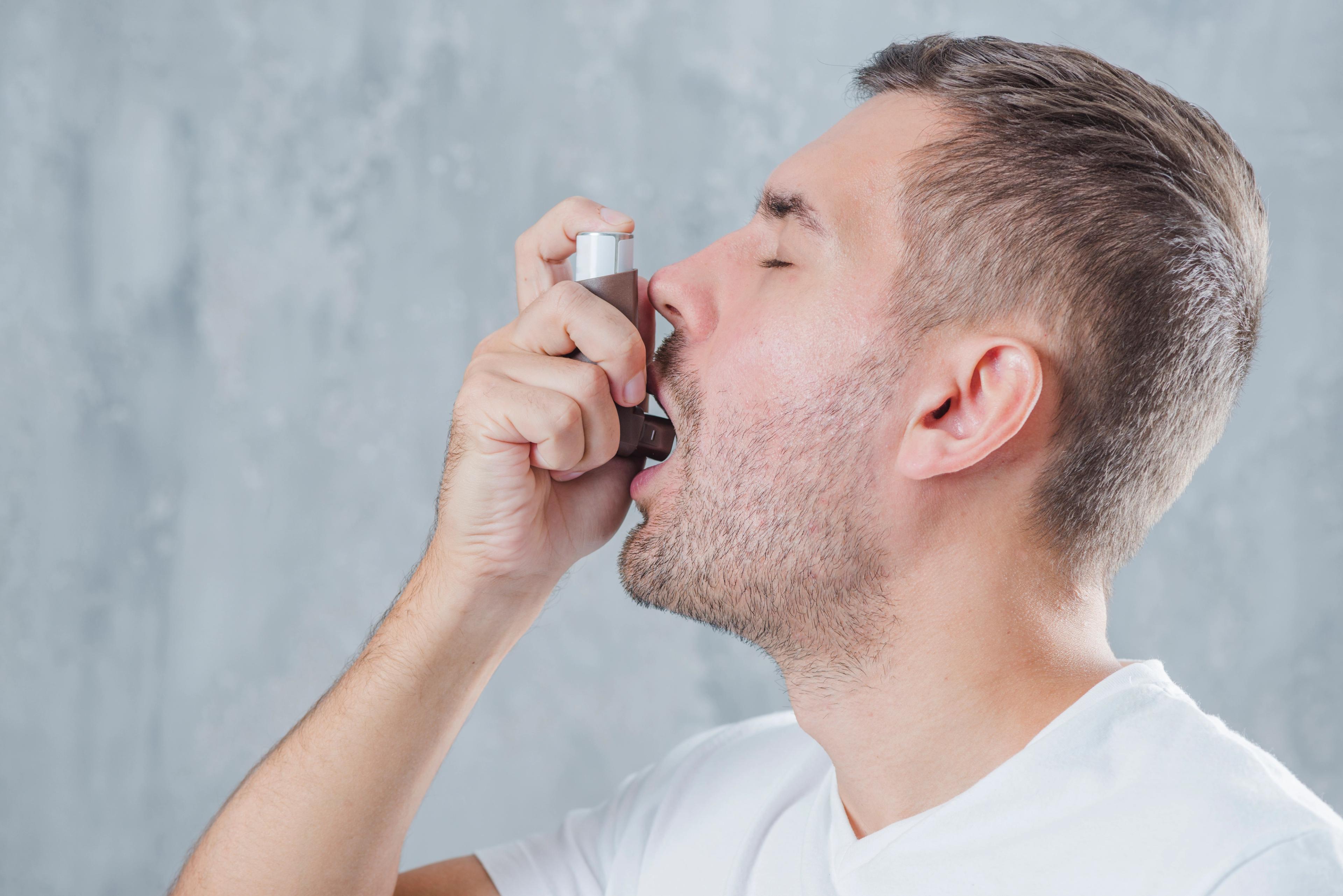

Breztri Aerosphere combines three medicines in one inhaler: an inhaled steroid to calm inflammation and two long acting bronchodilators to keep the airways open. For people with COPD who keep having flare-ups on two medicines, it is a common next step, and since April 2026 it is also approved for asthma. Three medicines mean three sets of possible side effects, but most are predictable and preventable. This guide explains what the official label reports, which side effects matter most, the simple habits that prevent the most common ones, how Breztri compares with Trelegy, and what the options are when even triple therapy does not stop the flare-ups, including research for people at exactly that point.
Still having COPD flare-ups on Breztri?
Studies are testing new COPD treatments for people who are already on inhaler therapy, usually added on top of what you take now.
What is in Breztri and why that matters
Breztri contains budesonide, an inhaled corticosteroid; glycopyrrolate, a long acting muscarinic antagonist; and formoterol, a long acting beta agonist. It is taken as two puffs twice a day and is a maintenance medicine, not a rescue inhaler: it does not relieve sudden breathlessness, which still needs a quick acting inhaler. Each component brings its own typical side effects: the steroid can cause thrush and a hoarse voice and, in COPD, slightly raises pneumonia risk; the muscarinic blocker can cause dry mouth, urinary difficulty, and in rare cases eye pressure problems; the beta agonist can cause tremor, a fast heartbeat, or muscle cramps.

Our COPD treatment guide explains where triple therapy fits.
The common side effects, with the numbers from the label
In the year long COPD trial of more than 8,500 people, the side effects reported in at least 2 percent of those on Breztri were upper respiratory tract infection (5.7 percent), pneumonia (4.6 percent), back pain (3.1 percent), oral thrush (3.0 percent), flu, muscle spasms, urinary tract infection, cough, sinusitis, and diarrhea. For comparison, people on the two bronchodilators without the steroid had pneumonia in 2.9 percent and thrush in 1.1 percent, so the steroid component accounts for most of the difference. In the asthma trials the most common were nasopharyngitis, pneumonia, and headache. Hoarseness and dry mouth are common complaints in practice even though they fall below the label's 2 percent threshold in some trials.
The side effects that deserve attention
Pneumonia. People with COPD already have a higher pneumonia risk, and inhaled steroids raise it further. The label advises watching for a new or worsening cough with fever, sputum changes, or breathlessness, because pneumonia and a COPD flare-up can look alike. This is the most important risk to understand, and it is weighed against the reduction in flare-ups the steroid provides.
Thrush. A fungal infection of the mouth and throat, visible as white patches or felt as soreness. It is common with any inhaled steroid and treatable, and usually preventable.
Eye and urinary effects. Because of the muscarinic blocker, the label warns about worsening of narrow angle glaucoma and of urinary retention in people with an enlarged prostate; new eye pain, halos around lights, or difficulty passing urine need review.
Heart effects and tremor. Formoterol can cause palpitations, a fast heartbeat, tremor, or nervousness, especially early on. The label also advises attention to low potassium and raised blood sugar in some people.
Paradoxical bronchospasm. Rarely, an inhaler makes breathing suddenly worse right after a dose; that needs immediate rescue medicine and a call to your doctor.
Long term steroid effects. With inhaled steroids over years, bone thinning, cataracts, glaucoma, and adrenal suppression are possible and are monitored.
Two habits that prevent most problems
First, rinse your mouth with water and spit it out after every dose. The label specifically recommends this to reduce thrush, and it also helps hoarseness. Second, use the inhaler correctly: Breztri is a pressurized inhaler that works best with a slow, deep breath timed with the spray, and a spacer can help if coordination is difficult. Poor technique both weakens the effect and deposits more steroid in the mouth. Having a pharmacist or nurse watch you use it once is worth more than any list of tips.
Breztri vs Trelegy
Trelegy Ellipta is the other main triple inhaler, and the two are more alike than different. Both combine an inhaled steroid, a muscarinic blocker, and a beta agonist, and both are approved for COPD and asthma. The practical differences: Trelegy is a dry powder inhaler taken once a day, while Breztri is a pressurized aerosol taken twice a day; some people find one device easier to use than the other, and people who cannot breathe in forcefully enough for a dry powder may do better with the aerosol. Their side effect lists overlap almost completely, with thrush, pneumonia, upper respiratory infections, and back pain near the top of both. There is no clear winner on effectiveness for most people, so the choice usually comes down to device, insurance, and how you get on with it.
Breztri generic and alternatives
There is no generic version of Breztri. If cost is the problem, the manufacturer's savings program and formulary alternatives such as Trelegy are the usual routes. If side effects are the problem, options include a different triple inhaler, stepping back to two bronchodilators without the steroid when flare-ups are infrequent, or adding treatments that work differently. Since 2024 three medicines with new mechanisms have been approved for COPD: an inhaled medicine called ensifentrine (Ohtuvayre) and, for people with a specific type of inflammation and frequent flare-ups, the injected biologics dupilumab (Dupixent) and mepolizumab (Nucala). Decisions like these depend on your flare-up history and test results, so they belong in a conversation with your doctor.
When triple therapy is still not enough
If you are on Breztri, using it correctly, and still having flare-ups that need steroids, antibiotics, or hospital care, you have reached the point where COPD research is most active. New treatments are tested in people with COPD who are already on inhaler therapy, often dual or triple, because that is where a new medicine has to prove it adds something. These studies enroll adults 40 to 85 with a diagnosis of COPD, emphysema, or chronic bronchitis and a significant smoking history, some for people with stable disease and others specifically for people who had a flare-up in the past year. They usually exclude people with an asthma diagnosis and other lung diseases such as pulmonary fibrosis. The study treatment is normally added on top of your inhalers, not instead of them. Our COPD clinical trials page lists studies recruiting now.
How to find a COPD study
AllClinicalTrials.com lists COPD studies recruiting across the US, and you can filter them by location before applying. Right now that includes a group of ten studies for adults 40 to 85 with COPD, emphysema, or chronic bronchitis who use COPD inhalers, from people with stable disease to those with recent flare-ups. The application takes about 5 minutes: you answer questions about your diagnosis, inhalers, smoking history, and flare-ups, and if a study near you looks like a match, the research team contacts you. Nothing is decided until you have gone through informed consent, and participation is voluntary at every step. More studies are on our COPD clinical trials page.
Three things to have ready: the names of your inhalers, your smoking history in rough pack-years, and how many flare-ups in the past year needed steroids, antibiotics, or a hospital visit.
Common questions
What are the most common side effects of Breztri? In the COPD trials: upper respiratory infection (5.7 percent), pneumonia (4.6 percent), back pain, thrush (3 percent), flu, muscle spasms, urinary tract infection, cough, sinusitis, and diarrhea. Hoarseness and dry mouth are also common in practice.
Does Breztri increase the risk of pneumonia? Yes, modestly, because of the inhaled steroid. In the year long trial pneumonia occurred in 4.6 percent of people on Breztri versus 2.9 percent on the same two bronchodilators without the steroid. Report any new cough with fever or sputum changes.
How do I prevent thrush from Breztri? Rinse your mouth with water and spit after every dose, as the label recommends, and use good inhaler technique so less steroid lands in the mouth. Thrush is treatable with antifungal medicine if it develops.
Is Breztri better than Trelegy? They contain the same three types of medicine and have similar effectiveness and side effects. Breztri is an aerosol taken twice a day; Trelegy is a dry powder taken once a day. Device preference, insurance, and tolerance usually decide.
Is there a generic for Breztri? No. The manufacturer offers a savings program, and Trelegy is the main alternative triple inhaler.
Can Breztri be used for asthma? Yes. In April 2026 the FDA approved Breztri for asthma in people 12 and older, making it the first triple inhaler approved for asthma in adolescents as well as adults; Trelegy is approved for asthma in adults.
What if I still have flare-ups on Breztri? Check inhaler technique and adherence first, then discuss options with your doctor: a different device, newer add-on medicines approved since 2024, or a clinical study of a new COPD treatment, which usually continues your inhalers.
Do COPD trial participants get paid? Some studies offer compensation for time and travel, and study related care is typically provided at no cost to participants. Compensation varies by trial and is always described during the informed consent process before you agree to anything.