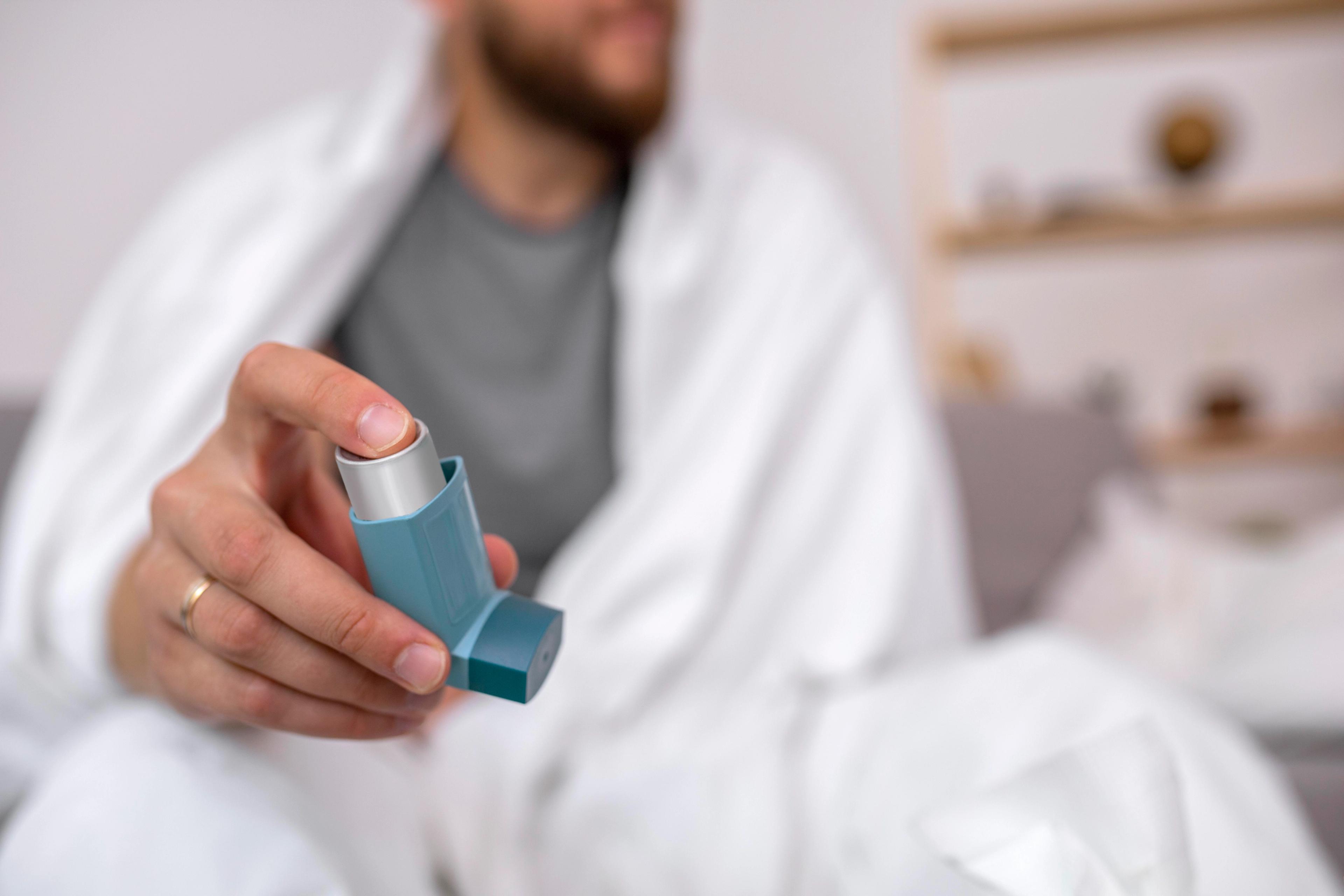

If you live with COPD, you have probably noticed that treatment conversations sound the same year after year. Inhalers, oxygen, pulmonary rehab, quit smoking. For more than two decades that was basically the whole menu, because no drug with a genuinely new mechanism reached patients in all that time.
That finally changed. Between June 2024 and May 2025, the FDA approved three new COPD medicines, including the first biologics ever cleared for this disease. Three approvals in twelve months, in a field that had gone twenty years without one, is a real shift in direction. This article walks through what is approved today, what researchers are testing right now, why COPD research moves slowly, and how to find a study if you want to be part of it.
Looking for treatment options for COPD?
Browse open COPD clinical trials near you! We'll handle the follow-up.
What is approved for COPD today
The foundation of COPD care has been stable for a long time, and it still matters.
Bronchodilators. These are inhaled medicines that relax the muscles around your airways so air moves more easily. Doctors group them into two families, LAMAs and LABAs, based on which signals in the airway they work on. Most people with COPD use at least one, and for many people this is the whole of drug treatment for years.
Inhaled corticosteroids. These calm inflammation in the airways. They are usually added for people who keep having flare ups, rather than given to everyone from the start.
Combination inhalers. Brands like Trelegy and Breztri pack two or three of these medicines into one device, so one inhalation covers everything. Getting the technique right matters as much as the medicine, which is why inhaler use itself is something researchers study.
Oxygen therapy and pulmonary rehab. Not drugs, but core parts of care. Rehab programs combine supervised exercise and education. Researchers keep working on the oxygen side of this: a Temple University study recruiting now is testing high flow nasal therapy delivered at home in 642 people with COPD, which is a large number for a device study.
Then came the new wave.
Ohtuvayre (ensifentrine). Approved in June 2024. It is an inhaled maintenance treatment that works through a mechanism no other COPD inhaler uses, blocking two enzymes (PDE3 and PDE4) at the same time. That made it the first COPD inhaler with a novel mechanism in more than 20 years. Developed by Verona Pharma.
Dupixent (dupilumab). Approved in September 2024 as the first biologic for COPD. A biologic is a protein made in a lab, given by injection, that blocks a specific driver of inflammation. Dupixent is an add-on for people whose COPD shows a particular inflammation pattern, measured with a simple blood test for cells called eosinophils. From Sanofi and Regeneron.
Nucala (mepolizumab). Approved in May 2025 by GSK, the second biologic for COPD, also aimed at people with the eosinophilic form of the disease.
Why does the eosinophil detail matter? Because it marks a shift. COPD treatment used to be the same for almost everyone. The new biologics only work for people with a certain inflammation profile, so a blood test now helps decide who gets what. Researchers call this phenotype driven treatment, and it is the direction the whole field is heading. It also explains something patients run into when they start looking at studies: a trial that seems like an obvious fit on paper may still ask for a blood result before it can say yes.
What researchers are studying now
The three new drugs weren't the end of the story, more are being tested.
Itepekimab is another new biologic, made by Sanofi and Regeneron. It blocks a protein called IL-33 that's involved in inflammation. In a big study finished in May 2025, the results were mixed: one of the two trials showed the drug reduced flare-ups, but the other one didn't. That might sound like bad news, but the companies are continuing the research anyway, because getting a positive result in even one large trial is worth digging into further. This is actually normal for how new COPD drugs get developed, it's rarely a simple yes or no.
Tezepelumab is another drug being tested. It blocks a different inflammation signal called TSLP. AstraZeneca, the company developing it, is one of the most active sponsors of COPD studies right now.
Here's something that surprises most people: most COPD research isn't about new drugs at all. As of August 2026, there are over 400 COPD studies recruiting around the world, and most of them are testing things like:
- Home monitoring devices that try to catch a flare-up early, before it lands you in the hospital
- Oxygen devices you can use at home
- Lung imaging techniques
- Procedures for severe emphysema (using valves or sealants)
- Pulmonary rehab programs
- Long-term studies that just follow patients over time to learn more about the disease
One example: Pulmonx is running a study of its AeriSeal system, a sealant treatment for people with severe emphysema, to see if it can improve how air flows through damaged parts of the lungs. Another interesting area is imaging, some studies now use a special scan with inhaled xenon gas, which shows where air actually reaches inside the lungs. That's a different kind of information than a standard breathing test can give.
So if you join a COPD study, odds are it will involve a device, a monitor, or a questionnaire rather than a new drug. That is worth knowing before you start reading listings, because a patient who expects "new drug or nothing" will scroll past most of what is actually recruiting.
Why COPD research takes time
Three main problems slow things down.
The measurement problem. The key question in a COPD drug trial is: does this drug reduce flare-ups? But flare-ups don't happen on a schedule, so researchers can't measure them in a short study, trials usually need to run about a year per person. This makes trials long and expensive. It also means researchers can only enroll people who've had flare-ups before; someone who hasn't had one in years wouldn't provide any useful data.
The phenotype problem. The newest drugs only work for people with a specific biological profile. That's good medicine, it targets treatment to the right people, but it also shrinks the pool of people who qualify for a trial. For example, a study that requires a certain blood marker (like elevated eosinophils) will turn away many willing volunteers who don't have it. This same blood test also decides who can get the drug after it's approved.
The representation problem. Women make up more than half of diagnosed COPD cases in the US, and the disease hits rural communities and American Indian and Alaska Native populations especially hard. But most trial locations are in big-city academic hospitals. That means the people most affected by COPD are often furthest from the research studying it, and that gap makes the results less reliable for everyone. Some studies are now working to recruit from these communities, and remote monitoring trials help because they come to your home instead of asking you to travel.
COPD and asthma are not the same thing
It's easy to mix these two up. Both make it hard to breathe, both involve narrowed airways, and both are treated with inhalers.
The real difference is whether the narrowing is reversible. With asthma, airways narrow and then open back up, especially after using a fast-acting inhaler. With COPD, the narrowing sticks around and doesn't fully reverse. Doctors confirm this with a breathing test, using specific numbers to tell the two apart.
They also tend to show up differently in life. Asthma can start at any age, often in childhood, and is linked to things like being born early or having allergies. COPD is usually diagnosed later in life, and smoking is its biggest risk factor. It's also possible to have both at once (called asthma-COPD overlap), and having asthma actually raises your risk of developing COPD later on.
Why this matters if you're looking at studies: almost every COPD study will confirm your diagnosis with a breathing test first, and many studies exclude people whose main diagnosis is asthma, or treat them as a separate group.
The early signs, and why stage 1 slips past people
COPD tends to start quietly. In the early stages, you might feel no symptoms at all, or just mild ones. Common early signs include:
- Shortness of breath, especially during physical activity
- An ongoing cough, sometimes with a lot of mucus
- Wheezing
- Tightness or heaviness in the chest
- Fatigue
The ongoing cough, sometimes called a "smoker's cough", is often the first thing people notice. But it's the shortness of breath that tends to get worse over time and eventually pushes someone to see a doctor, often years after the cough first started.
That's really why stage 1 COPD is so rarely caught early: an occasional morning cough doesn't feel urgent enough to warrant a doctor's visit. A simple breathing test (spirometry) can catch COPD before you even notice symptoms, but only if someone thinks to ask for it.
Does COPD affect more than the lungs
Yes, and it is worth knowing about. People with COPD have higher rates of cardiovascular disease, lung cancer, osteoporosis, and anxiety and depression. Some also have overlapping asthma.
The mental health side gets the least attention and deserves more. Anxiety and depression sit on the comorbidity list alongside the heart and bone conditions, and they are easy to treat as separate problems when they are not separate at all for the person living with them.
None of this means every person with COPD will develop these conditions. It means checkups should look beyond the lungs. If you have COPD, ask your doctor which screenings make sense for you.
Common myths about COPD
"Only smokers get COPD."
Smoking is the leading cause in the US, but it's not the only one. Long-term exposure to air pollution or workplace dust and fumes can cause COPD too. So can alpha-1 antitrypsin deficiency, a genetic condition. And many people with COPD linked to smoking quit years or even decades ago. Researchers are studying the genetic side specifically: Brigham and Women's Hospital is running the Boston Early-Onset COPD Study, a 2,000-person study looking at why some people develop COPD at an unusually young age.
"It's just a smoker's cough."
This myth is one of the biggest reasons COPD goes undiagnosed for so long. Early symptoms often get brushed off as a normal cough or just "getting older," so the breathing test that actually confirms COPD (spirometry) doesn't get used as often as it should. The result: over 14 million US adults have been diagnosed, and millions more likely have it without knowing. Researchers are working on easier ways to catch it early, for example, Indiana University is running an 800-person study of an acoustic device that listens to breathing sounds to help detect COPD, asthma, and cystic fibrosis.
"COPD and emphysema are different diseases."
Not quite. COPD is the umbrella term. Emphysema (damaged air sacs in the lungs) and chronic bronchitis (inflamed, mucus-clogged airways) both fall under it. Doctors used to treat them as separate diagnoses, but most people with COPD actually have a mix of both, which is why "COPD" became the umbrella term used today.
"A chest X-ray will show if I have COPD."
It won't. An X-ray can help rule other conditions in or out, but it can't diagnose COPD on its own. Diagnosis depends on a breathing test (spirometry), plus your symptoms and medical history. If you've been told your chest X-ray looks normal but you're still short of breath, that's a reason to ask about a breathing test, not a reason to stop looking for answers.
The four GOLD stages, and what care usually looks like
Doctors grade COPD with the GOLD system, stage 1 through 4, based on spirometry. The grade comes from how much air you can force out in one second compared with what is expected for someone your age, height, and sex. Here is what typical care tends to involve at each stage. This describes usual practice, not a recommendation for you personally.
GOLD 1 (mild). Airflow is slightly limited. Many people are not diagnosed yet, and those who are often feel little day to day. When care starts here, it usually centers on quitting smoking and a bronchodilator inhaler as needed.
GOLD 2 (moderate). Breathlessness during activity brings most people to a doctor at this stage, often when a walk uphill or a flight of stairs starts to feel different. Regular maintenance inhalers and pulmonary rehab commonly enter the picture, and rehab at this stage is about keeping capacity rather than recovering it.
GOLD 3 (severe). Flare ups become more frequent. Care often steps up to combination inhalers, and preventing flare ups becomes a central goal at this stage.
GOLD 4 (very severe). Breathing is hard even at rest. Oxygen therapy is common, and for some people with severe emphysema, surgical or valve based procedures are considered. Supportive care focuses on comfort and quality of life.
One practical note for trial seekers: studies use these stages for eligibility, so knowing your grade tells you a lot about which listings are worth reading. And severe or very severe COPD does not shut the door. Later stage patients are exactly who many studies in this field are looking for, and the device, oxygen, and interventional work concentrates there.
How to find a COPD study
AllClinicalTrials.com lists COPD studies recruiting across the US and matches you to studies based on your stage, smoking history, and flare-up history. It takes about 5 minutes, and there's no cost or obligation.
A few examples show how varied COPD research really is right now: a group of ten studies for adults 40 to 85 with COPD, emphysema, or chronic bronchitis, from stable disease to recent flare-ups, a Pfizer drug trial testing PF-07275315 in moderate to severe COPD, and a device study testing an under-mattress sensor that can catch flare-ups before you'd notice them yourself.
Before you start browsing, have three things ready: your most recent spirometry result, a rough flare-up count from the past year, and your smoking history in pack-years. Those three answers decide eligibility for most drug studies
Common questions
What is COPD, in simple terms? COPD is short for chronic obstructive pulmonary disease, a long term lung disease where air cannot move in and out freely. That happens because the air sacs are damaged, the airways are inflamed and full of mucus, or both. It usually shows up in mid life or later, most often in people who smoked, and it gets worse slowly over years.
How is COPD diagnosed? There is no simple blood test for COPD. Doctors diagnose it with spirometry, a breathing test where you blow hard into a tube to measure how much air you can breathe out and how fast. Sometimes the test gets repeated after a medicine that opens the airways, to compare the results. Doctors also ask about your symptoms, your smoking history, and your family history. An X-ray alone cannot diagnose COPD. And spirometry can catch the disease early, sometimes before a person notices anything is wrong.
Is COPD the same as emphysema? Not exactly. Emphysema is one of the two conditions that make up COPD, along with chronic bronchitis. So it is a form of COPD, not a separate disease. Most people with COPD have some mix of both.
What is a COPD exacerbation? An exacerbation is a flare up, a period when breathlessness, cough, or mucus suddenly get worse and you may need extra medicine or a hospital visit. Most COPD drug trials count flare ups as their main result, so your flare up history often decides whether you qualify.
See COPD clinical trials recruiting now.
Browse open studies and check your eligibility here: COPD Clinical Trials.