

The BUN/creatinine ratio is one of the most common results flagged as abnormal on a routine blood panel, and it is also one of the most misunderstood. It compares two waste products in your blood, and its purpose is to suggest why they are off, not to measure how well your kidneys work. The single most common reason it is high is that you were a little dehydrated when the blood was drawn. This guide explains what the two numbers are, how the ratio is calculated, what the normal range is, what high and low results usually mean, the one pattern that does point to kidney disease, and what to do next.
Diagnosed with kidney disease?
New treatments for chronic kidney disease are being tested now. See if a study is right for you.
What BUN and creatinine actually are
Blood urea nitrogen (BUN) measures urea, a waste product your liver makes when it breaks down protein from food and from your own tissues. Creatinine is a waste product of normal muscle activity, produced at a fairly steady rate that depends mostly on how much muscle you have. Both are cleared by the kidneys, which is why both rise when the kidneys slow down. The difference is what happens before the kidneys: BUN also rises when you are dehydrated, eat a lot of protein, bleed into the gut, or take certain medicines, while creatinine barely budges for those reasons. That difference is the whole point of the ratio.

Our guide explains what a high creatinine level means on its own.
How the ratio is calculated, and the normal range
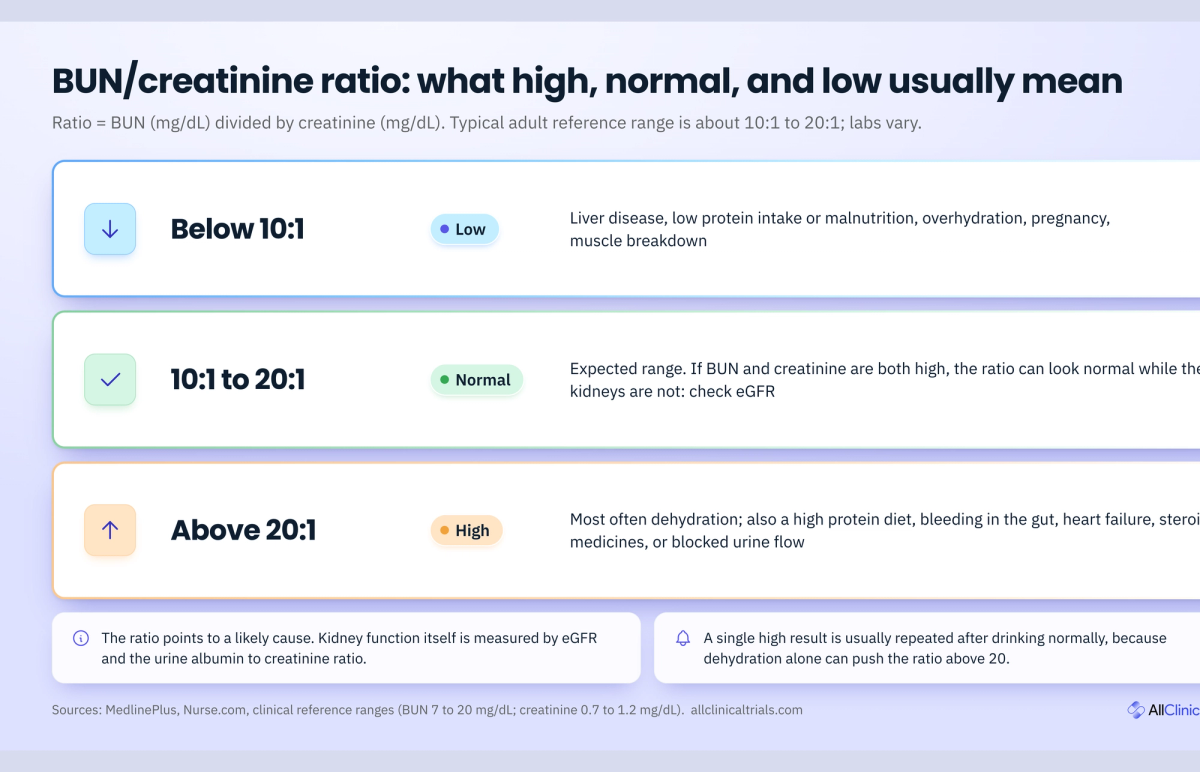
Divide your BUN by your creatinine, both in mg/dL. A BUN of 18 and a creatinine of 1.0 gives a ratio of 18, written 18:1. Most laboratories consider roughly 10:1 to 20:1 normal for adults, though reference ranges vary, and some labs flag anything above 20 or below 10. Typical adult reference ranges for the two numbers themselves are about 7 to 20 mg/dL for BUN and 0.7 to 1.2 mg/dL for creatinine. One quirk to know: a high ratio produced by a low or low-normal creatinine, with BUN still in the normal range, is usually not clinically significant. Someone small, older, or with little muscle mass has a naturally low creatinine, which inflates the ratio without anything being wrong.
What a high BUN/creatinine ratio means
A ratio above about 20:1 means BUN has risen more than creatinine. Doctors call this a prerenal pattern, meaning the cause is usually before the kidneys rather than inside them. The common causes, roughly in order of how often they turn up:
Dehydration. By far the most frequent reason. When you are short of fluid, the kidneys hold on to water and reabsorb urea along with it, so BUN climbs within hours while creatinine stays put. A long fast without fluids before the test, a hot day, vomiting or diarrhea, diuretics (water pills), or simply not drinking much can do it.
A high protein diet or protein supplements. More protein means more urea. A high protein diet can raise BUN noticeably within days.
Bleeding in the stomach or upper intestine. Blood in the gut is digested like a large protein meal, so a very high ratio with black or bloody stools, or unexplained anemia, needs prompt attention.
Heart failure. When the heart pumps less effectively, blood flow to the kidneys falls and urea is reabsorbed. In people with heart failure, a rising BUN/creatinine ratio is taken seriously, because studies have linked it to a worse course of the disease. If you have a heart condition, this is the one cause worth discussing specifically; see our heart failure clinical trials page and treatment guide.
Medicines and body stress. Corticosteroids such as prednisone, some antibiotics in the tetracycline family, fever, infection, and recovery from surgery all increase protein breakdown and raise BUN.
Blocked urine flow. Less commonly, an obstruction such as an enlarged prostate or a kidney stone can raise the ratio.
What a low BUN/creatinine ratio means
A ratio below about 10:1 is less common and usually means BUN is low rather than creatinine high. Causes include liver disease, because a struggling liver makes less urea; a very low protein diet or malnutrition; drinking a great deal of fluid; and pregnancy, when blood volume expands and BUN runs lower than usual. A low ratio can also appear when creatinine rises faster than BUN, as in muscle breakdown after intense exercise or injury. Like a high ratio, a low one is a prompt for context rather than a diagnosis.
The pattern that does point to the kidneys
Here is the part most quick explanations skip. Chronic kidney disease usually raises BUN and creatinine together, so the ratio often stays normal while both numbers are high. In other words, a normal ratio is not reassurance about kidney function, and a high ratio by itself is not evidence of kidney disease. Kidney function is measured by eGFR, which your lab calculates from creatinine, and by a urine test for albumin. If your creatinine is above the reference range, your eGFR is below 60, or your doctor has found protein in your urine, those are the numbers that matter, and they are worth a proper conversation.

Our guide to the stages of chronic kidney disease explains how treatment changes at each stage.
What to do with a high ratio
If everything else on the panel is normal and you have no symptoms, the usual next step is simple: repeat the test on a day when you have been eating and drinking normally and have not just finished a heavy protein meal or a long fast. Many high ratios disappear on the repeat. Tell your doctor about any water pills, steroids, or protein supplements. Seek care promptly if a high ratio comes with black or bloody stools, vomiting blood, dizziness or fainting, very little urine, or swelling and breathlessness, which can signal bleeding, severe dehydration, or heart failure. And if the repeat test still shows a high BUN with a high creatinine, or your eGFR is reduced, ask what is driving it rather than accepting the flag as normal.
When the numbers point to research
Two situations behind an abnormal ratio are active areas of clinical research. The first is chronic kidney disease caught before dialysis: new kidney protecting medicines are tested in exactly the people whose creatinine and eGFR have started to drift, often with protein in the urine and blood pressure already treated with an ACE inhibitor or ARB. The second is heart failure, where studies test treatments for people already on heart medicines. If your abnormal ratio turned out to be one of these rather than a dry morning, you may be the kind of participant those studies are looking for.
How to find a kidney or heart study
AllClinicalTrials.com lists kidney and heart studies recruiting across the US, and you can filter them by location and check the basic criteria before applying. Right now that includes a group of three studies for adults with chronic kidney disease or protein in the urine who are not on dialysis, some of them designed for people whose blood pressure is already treated with an ACE inhibitor or ARB, and a large group of studies for adults with heart failure and other heart conditions who take medicine for their heart. The application takes about 5 minutes: you answer questions about your diagnosis, medicines, and recent test results, and if a study near you looks like a match, the research team contacts you. Nothing is decided until you have gone through informed consent, and participation is voluntary at every step.
Three things to have ready: your BUN, creatinine, and eGFR values from the same panel, any urine albumin result, and the list of medicines you take, including water pills and blood pressure medicines.
Common questions
What is a normal BUN/creatinine ratio? About 10:1 to 20:1 for most adults, though laboratories differ and some use a wider range. The ratio is read alongside the individual BUN, creatinine, and eGFR values, never alone.
What does a BUN/creatinine ratio of 25 mean? A ratio above 20 most often means dehydration, a high protein diet, or reduced blood flow to the kidneys, and less often bleeding in the gut. If your creatinine and eGFR are normal and you feel well, the usual step is a repeat test after normal eating and drinking.
Is a high BUN/creatinine ratio dangerous? Usually not on its own. It becomes important when it comes with symptoms such as black stools, fainting, very low urine output, or breathlessness, or when creatinine and eGFR are also abnormal. Those situations need medical attention.
What does a low BUN/creatinine ratio mean? Most often that BUN is low: liver disease, a low protein diet or malnutrition, drinking a lot of fluid, or pregnancy. It can also happen when creatinine rises quickly, for example after muscle injury.
Does the BUN/creatinine ratio show kidney disease? Not by itself. Kidney disease usually raises both numbers, so the ratio can stay normal. eGFR and a urine albumin test are the measures of kidney function; a high ratio with a normal creatinine is usually a fluid or diet issue.
How do I lower my BUN/creatinine ratio? By treating the cause. For dehydration, drinking normally brings it down quickly; a very high protein intake can be moderated; medicines such as steroids or water pills may need review with your doctor. Do not change medicines on your own.
See chronic kidney disease clinical trials recruiting now
Browse open studies, filter by location, and apply in about 5 minutes: Chronic Kidney Disease Clinical Trials. Heart studies are on our cardiovascular clinical trials page.