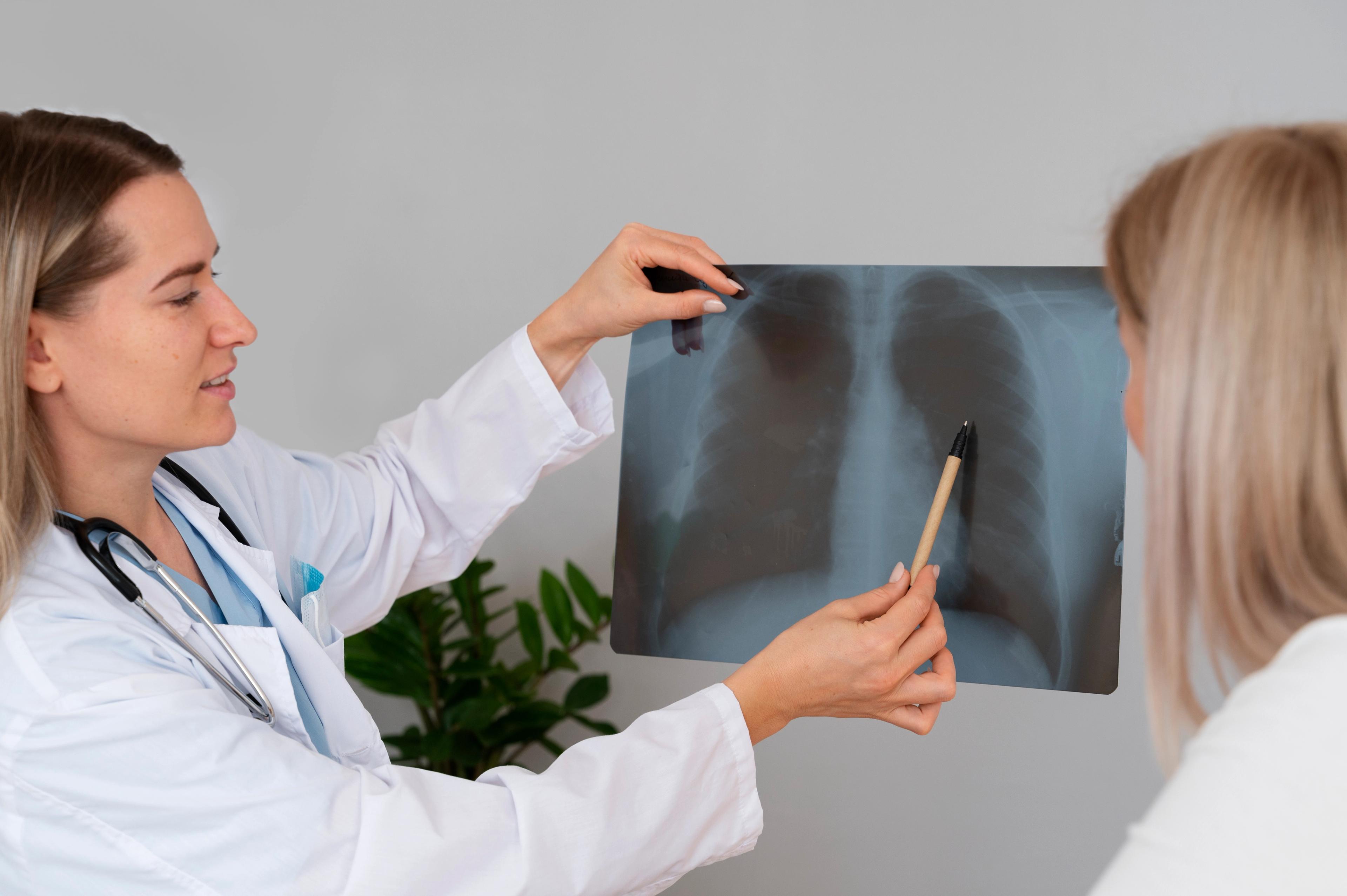

When people are told they have COPD, the first thing they usually want to know is their stage, and the second is what that stage means for how long they have. The honest answers are more hopeful than most expect. The stage is based on a breathing test and on how often your COPD flares, and while lung damage cannot be undone, the course of the disease varies enormously from person to person. In one long-term study that followed people for eight years or more, most people with COPD, roughly 7 to 8 in 10, stayed in the same spirometry grade, and only a minority declined quickly. This guide explains the COPD stages, the difference between emphysema and chronic bronchitis, what affects life expectancy, whether COPD can be reversed, and what still makes a difference at every stage, including research for people living with it now.
Living with COPD, emphysema, or chronic bronchitis?
Get regular check-ins with a research team who monitor your breathing, while you help test new COPD treatments.
The COPD stages: GOLD grades 1 to 4
Doctors stage COPD with spirometry, a breathing test that measures how much air you can blow out in one second, called FEV1, compared with what is expected for someone your age, height, and sex. COPD is confirmed when airflow is blocked, and the grade describes how much. The Global Initiative for Chronic Obstructive Lung Disease (GOLD) uses four grades:
GOLD 1, mild: FEV1 80 percent of predicted or more. Many people have few symptoms and do not know they have COPD.
GOLD 2, moderate: FEV1 50 to 79 percent. Breathlessness on exertion becomes noticeable; this is when most people are diagnosed.
GOLD 3, severe: FEV1 30 to 49 percent. Breathlessness limits daily activity, and flare-ups become more common.
GOLD 4, very severe: FEV1 below 30 percent. Daily life is significantly affected, and some people need oxygen.
Why your group (A, B, or E) matters as much as your grade
Since 2023, GOLD has paired the grade with a group based on symptoms and flare-ups, because two people with the same FEV1 can live very different lives. Group A has fewer symptoms and at most one moderate flare-up a year that did not need a hospital stay; group B has more symptoms but the same low flare-up history; group E is anyone with two or more moderate flare-ups in a year, or one that needed a hospital stay, whatever their FEV1. Flare-ups, also called exacerbations, matter because each one can speed lung function decline, and they are the main thing treatment and research try to prevent. Your treatment plan is chosen largely by your group, which is why it is worth knowing.
Emphysema vs chronic bronchitis
COPD is an umbrella term for two processes that often occur together. In emphysema, the tiny air sacs in the lungs are damaged, so the lungs lose their elasticity and trap air, causing breathlessness. In chronic bronchitis, the airways are inflamed and produce excess mucus, causing a cough with phlegm on most days for at least three months in two consecutive years. Most people with COPD have features of both, and both are treated within the same framework. Smoking is the leading cause of each.
COPD life expectancy: what actually predicts it
There is no single life expectancy for COPD, and anyone who gives you a number without knowing your details is guessing. What predicts outlook is a combination of factors: lung function, how breathless you are, how far you can walk, how often you have flare-ups, whether you keep smoking, your weight, and other conditions such as heart disease. Doctors sometimes combine several of these into a score such as BODE, which predicts outcomes better than FEV1 alone. Many people with mild or moderate COPD live for decades, and stopping smoking, avoiding flare-ups, and staying active change the outlook at every stage. Your own doctor is the right person to discuss your situation.
Can COPD be reversed?
The lung damage of COPD cannot be reversed, and no medicine restores lost lung tissue. But the disease can be slowed, symptoms can improve substantially, and flare-ups can be prevented. Stopping smoking is the single most effective step at any stage; see our smoking cessation studies. Inhaled medicines open the airways and reduce flare-ups, pulmonary rehabilitation improves breathlessness and stamina, and vaccines reduce infections that trigger flare-ups. Treatment has also expanded recently: in June 2024 the FDA approved ensifentrine (Ohtuvayre), the first inhaled COPD medicine with a new mechanism in more than 20 years, and in September 2024 dupilumab (Dupixent) became the first biologic approved for COPD, and in May 2025 mepolizumab (Nucala) followed, both for people with a specific type of inflammation.

Our guide to COPD treatment options covers each option.
Why people with COPD are needed in research now
Every recent COPD approval came from trials in people living with the disease, and many more treatments are being tested. Studies enroll adults with COPD across the spectrum: some look for people with stable, well managed disease on one or two inhalers, and others for people who have had a flare-up in the past year that needed steroids, antibiotics, or hospital care. Most require a significant smoking history, current or past, and exclude people with asthma or other lung diseases such as pulmonary fibrosis, which would make results hard to interpret. Studies usually add a new treatment on top of your current inhalers rather than replacing them.
How to find a COPD study
AllClinicalTrials.com lists COPD studies recruiting across the US, and you can filter by location before applying. Right now that includes a group of ten studies for adults 40 to 85 with COPD, emphysema, or chronic bronchitis, from people with stable disease to those who have had recent flare-ups. The application takes about 5 minutes: you answer questions about your diagnosis, inhalers, smoking history, and flare-ups, and if a study near you looks like a match, the research team contacts you. Nothing is decided until you have gone through informed consent, and participation is voluntary at every step. More studies are on our COPD clinical trials page.
Three things to have ready: the names of your COPD inhalers, your smoking history in rough pack-years (packs a day times years smoked), and how many flare-ups in the past year needed steroids, antibiotics, or a hospital visit.
Common questions
What are the 4 stages of COPD? GOLD 1 (mild, FEV1 80 percent or more of predicted), GOLD 2 (moderate, 50 to 79 percent), GOLD 3 (severe, 30 to 49 percent), and GOLD 4 (very severe, below 30 percent). Doctors also assign a group, A, B, or E, based on symptoms and flare-ups.
What is the life expectancy with COPD? It varies widely. Lung function, breathlessness, exercise capacity, flare-ups, smoking, weight, and other conditions all matter, and many people with mild or moderate COPD live for decades. Your doctor can give the most useful estimate.
Can COPD be reversed? The lung damage cannot be reversed, but progression can be slowed, symptoms can improve, and flare-ups can be prevented. Stopping smoking is the most effective step at any stage.
What is the difference between emphysema and chronic bronchitis? Emphysema damages the air sacs, causing breathlessness; chronic bronchitis inflames the airways, causing a long lasting cough with mucus. Most people with COPD have both.
What are the newest COPD treatments? Ensifentrine (Ohtuvayre), approved in June 2024 as the first inhaled COPD medicine with a new mechanism in over 20 years, dupilumab (Dupixent), approved in September 2024 as the first biologic for COPD, and mepolizumab (Nucala), approved in May 2025.
Can I join a COPD study if I still smoke? Many COPD studies accept current and former smokers, and most require a significant smoking history. Each study lists its own rules.
Do COPD trial participants get paid? Some studies offer compensation for time and travel, and study related care is typically provided at no cost to participants. Compensation varies by trial and is always described during the informed consent process before you agree to anything.
See COPD clinical trials recruiting now
Browse open studies, filter by location, and apply in about 5 minutes: COPD Clinical Trials.