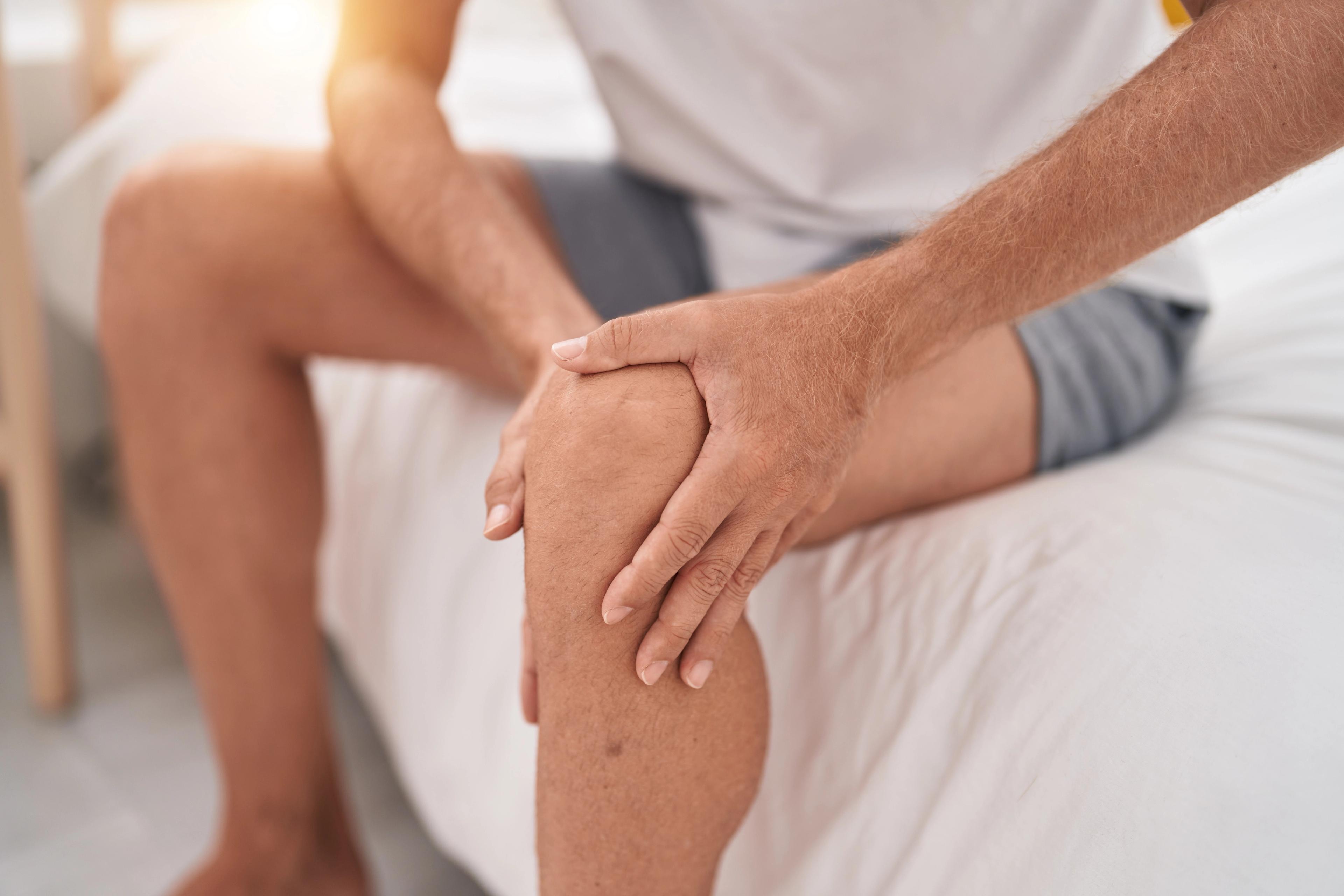

Here is a fact that surprises almost everyone who learns it. Osteoarthritis is the most common joint disease in the world, more than 500 million people have it, and there is no medicine on the market that slows it. Not one. Every approved treatment manages the pain. When pain management stops working, the answer is surgery: about a million knee and hip replacements a year in the US alone, nearly all because of arthritis.
That is not for lack of trying. Over the past decade, several promising drugs aimed at the disease itself reached advanced trials and failed. But the field is changing, partly from an unexpected direction. This article covers what osteoarthritis treatment looks like today, why the disease has been so hard to slow, what researchers are testing right now, and where clinical trials fit in.
Looking for treatment options for osteoarthritis?
Browse open osteoarthritis clinical trials near you! We'll handle the follow-up.
What osteoarthritis treatment includes today
Movement and weight. Exercise is the single most consistently recommended treatment, because stronger muscles take load off the joint, and it works even when it feels counterintuitive to move a painful knee. Losing weight matters enormously for knee and hip OA: every extra pound adds several pounds of force to the knee with each step.
Pain relievers. These include acetaminophen and anti inflammatory pills like ibuprofen and naproxen. There are also anti inflammatory gels you rub on the skin, which work well for knees and hands and cause fewer side effects than pills. Opioids are generally avoided.
Injections. Corticosteroid injections into the joint calm inflammation for weeks to a few months. Hyaluronic acid injections, sometimes called gel shots, are widely used though the evidence is mixed. Newer extended release steroids stretch relief out longer.
Surgery. Joint replacement is one of the most successful operations in medicine: more than 90 percent of replaced knees still work well after 15 years. A large share of people with advanced knee OA eventually have one. It is major surgery with a real recovery, which is why so much research aims to delay or avoid it.
What is missing. A disease modifying drug, one that protects cartilage the way statins protect arteries. Candidates that looked promising failed to deliver. Sprifermin, a growth factor, showed only a small effect in mid stage trials, and lorecivivint, a pathway blocker, missed its main goals in a large late stage trial. Nerve growth factor antibodies reduced pain but were turned down by the FDA in 2021 because they sped up joint damage in some people. The failures taught the field that OA is probably several diseases in one joint, and one drug may not fit all of them.
What researchers are studying now
The weight loss medicine turn. In late 2024, a trial called STEP 9 tested semaglutide, a weight loss medicine, in people who had obesity and moderate knee OA. After 68 weeks, they lost about 14 percent of their body weight and had much less knee pain than people who got a placebo, about 14 points better on a 100 point pain scale. Semaglutide is not approved for OA, and the study cannot tell how much of the improvement came from losing weight versus the medicine acting on the joint itself. But it opened a question researchers are now chasing hard. Two trials on our platform are testing the next version of this idea: Novo Nordisk's NNC0487-0111 in people with obesity and knee osteoarthritis, and the AMAZE 6 study of the same medicine in people who are overweight or have obesity along with knee OA.
Procedures that skip the operating room. Genicular artery embolization blocks the small blood vessels that feed an inflamed knee. A study is comparing it directly against steroid shots, while a companion study looks at what changes in the joint fluid afterward. Low dose radiotherapy for knee OA has been used for decades in Europe but rarely studied in the US, so it is now being tested in a real trial here. And an early study of cartilage repair in the hip is working on regrowing damaged cartilage directly.
New ways to treat pain. A trial of cannabinoids for knee and hip OA pain is testing a non opioid option many patients already ask about. PTP-001 (MOTYS), a shot made from placental tissue, is being tested for knee OA. And Eli Lilly is running one large trial that tests several possible pain medicines at once, with knee OA as one of the conditions included.
Prevention and better care. The Osteoarthritis Prevention Study is asking whether OA can be stopped before it even starts in people at high risk. A study pairing pharmacists with physical therapists is testing a new way to care for early knee OA. And a study on how much exercise actually helps is answering a question almost every patient asks: how much is enough?
Why osteoarthritis research takes time
The slow disease problem. Cartilage loss happens over years. To prove a drug slows it, a trial has to follow people for two years or more and measure tiny changes on X ray or MRI. That makes disease modifying trials long, large, and expensive, and it is a big reason so few companies attempt them.
The pain versus structure problem. Regulators want a drug to help both what patients feel and what scans show. Some candidates protected cartilage a little without reducing pain. Others reduced pain but damaged joints. Hitting both targets at once is the field's central difficulty.
The many diseases problem. OA in a young athlete after a knee injury, OA in an older adult with obesity, and OA in the hands of a 60 year old woman may be driven by different biology. Researchers now talk about OA subtypes, and newer trials increasingly select for one, which makes results cleaner but recruitment slower.
The representation problem. OA hits Black, Hispanic, and Indigenous Americans with more severe pain and more activity limitation than white Americans, and women more than men, yet trial populations have not matched that. Joint replacement rates also differ sharply by race and income. Several current studies name diverse enrollment as a goal. Here's why diversity in clinical trials matters so much.
Common myths about osteoarthritis
"Exercise will wear my joints out faster."
The opposite. Regular movement is the most consistently recommended OA treatment. Strong muscles protect joints, and inactivity makes stiffness and pain worse.
"OA is just old age, nothing to do about it."
Age raises risk, but more than half of people with painful knee OA are under 65, and weight, injury, and genes matter a lot. Pain can be managed, and joint replacement, when needed, works very well.
"An X ray tells you how bad your pain will be."
Not reliably. Some people with severe changes on X ray have little pain, and some with mild changes hurt a lot. That is why OA trials require both an X ray grade and a pain score.
"Supplements like glucosamine rebuild cartilage."
Large trials have not shown that glucosamine or chondroitin rebuild cartilage or reliably beat placebo for pain. Nothing sold today rebuilds cartilage.
The grades of OA, and what care usually looks like
Doctors grade OA on X ray with the Kellgren Lawrence scale from 0 (no signs) to 4 (severe), where 1 means doubtful. Typical care tracks it loosely: at grades 1 and 2, the focus is exercise, weight, and pain relievers as needed. At grade 3, injections and structured physical therapy often join in. At grade 4, joint replacement becomes a real conversation, alongside everything that helps in the meantime. This is a description of usual practice, not a recommendation, and your plan belongs to you and your doctor.
For trials, the grade plus your pain score are the eligibility language. Most drug studies want grades 2 and 3, because there is still cartilage to protect. Grade 4 has its own studies: procedures, replacement readiness programs, and devices. Knowing your grade and which joint lets you filter studies in minutes.
How to find an osteoarthritis clinical trial
AllClinicalTrials.com lists osteoarthritis studies recruiting across the US, from weight loss medicines to procedures, pain treatments, and exercise programs. Right now that includes a Novo Nordisk study testing a weight loss medicine for knee OA, a trial comparing a non surgical artery procedure to steroid injections, and the Osteoarthritis Prevention Study for people at high risk who have not developed OA yet.
The application takes about 5 minutes: you answer questions about which joints are affected, your pain level, and your treatment history, and if a study near you looks like a match, the research team contacts you. Nothing is decided until you have gone through informed consent, and participation is voluntary at every step.
Three things to have ready: which joint is affected, your X ray grade if you know it, and the treatments you have already tried. Those three answers decide eligibility for most OA studies.
Common questions
What is the best treatment for osteoarthritis? There is no single best. Exercise and weight management have the strongest evidence for long term benefit, anti inflammatory gels and pills help most people with flares, injections bridge the gap for months, and joint replacement is highly effective when nothing else works. No approved medicine slows the disease itself.
What is the newest treatment for osteoarthritis? The most talked about development is the 2024 trial showing that the weight loss medicine semaglutide substantially reduced knee OA pain in people with obesity. It is not approved for OA, and trials of related medicines are recruiting now. Procedures like genicular artery embolization are also being tested in randomized trials.
Can osteoarthritis be reversed? Not with any approved treatment. No medicine has been shown to regrow cartilage or reverse OA in people. Cartilage repair approaches are in early trials, and disease modifying drugs remain the main research goal.
Do osteoarthritis trials use placebo? Often, yes, because OA has a strong placebo response, especially for injections, and a comparison group is the only way to know a treatment truly works. Participants can usually keep their regular pain relievers, and many trials offer the active treatment afterward.
See osteoarthritis clinical trials recruiting now
Browse open studies, filter by location, and apply in about 5 minutes: Osteoarthritis Clinical Trials