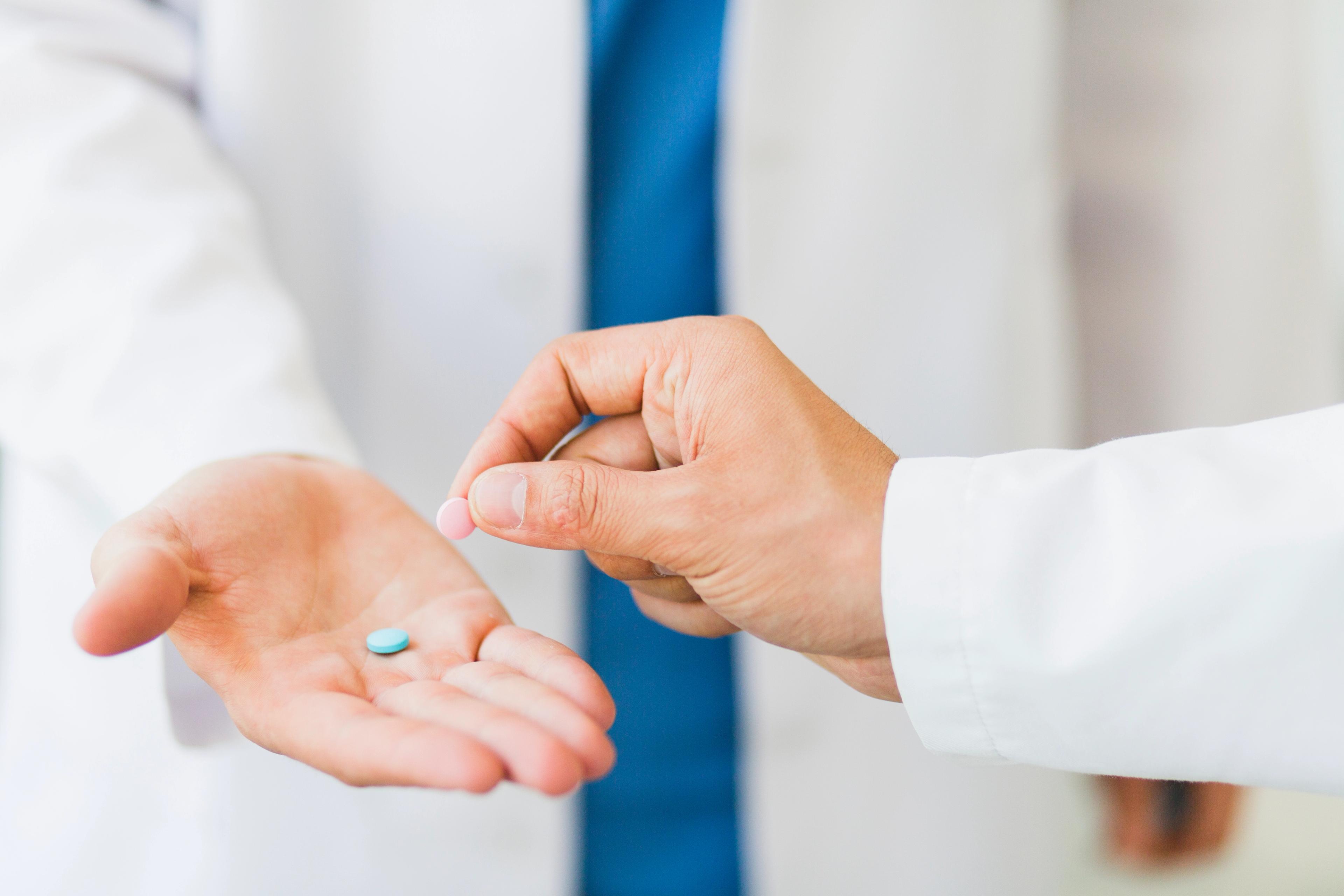

A control group is the group of participants in a study who do not receive the new treatment being tested. Instead they receive a placebo, the current standard treatment, or nothing at all, and their results become the baseline that the treatment group is compared against. Without a control group, researchers cannot tell whether people improved because of the treatment or because of something else. This guide explains what a control group is, how it differs from an experimental group, the types trials use, real examples from recent studies, and what being in the control group means for you.
Thinking about joining a study?
Browse thousands of studies by condition and location, and see which ones are recruiting near you.
What is a control group?
In research, a control group is a set of participants who are treated exactly like the experimental group in every way except one: they do not get the intervention being studied. Everything else, from the number of visits to the tests they undergo, stays the same. That single difference is what makes the comparison fair. If the treatment group does better than the control group, and the two groups were alike to begin with, the treatment is the most likely explanation.
The control group answers a question that sounds simple but is not: what would have happened anyway? Many illnesses improve on their own, people feel better when they are being looked after, and the seasons, diet, and chance all move results. A control group experiences all of those things too, so their effect can be subtracted out. The same idea is used across science: a control group in psychology, for example, is the group that does not receive the experimental condition, whether that is a new therapy program, a new teaching method, or a new app.
Control group vs experimental group
The experimental group, also called the treatment group, receives the intervention being tested. The control group does not. In a clinical trial, participants are usually assigned to one or the other at random, a process called randomization, so that the two groups are as similar as possible in age, health, and everything else that could affect the result. The experimental group definition is simply "the group that gets the thing being tested"; the control group definition is "the group that shows what happens without it." Neither group is more important. A trial needs both, and the result is the difference between them.
Why is a control group important?
Because improvement alone proves nothing. Imagine a cold remedy tested on 100 people, 90 of whom feel better in a week. That sounds impressive until you learn that 90 out of 100 people with a cold feel better in a week without any remedy. The purpose of a control group is to reveal that comparison. It protects against the placebo effect, against the natural course of a disease, against bias in how results are measured, and against the tendency of people who join a study to be different from those who do not. Regulators such as the FDA require a control group in almost every trial used to approve a new medicine for exactly these reasons.
A short history of the control group
The first controlled trial with a design we would recognize today took place on a ship.On 20 May 1747, a Scottish naval surgeon named James Lind chose 12 sailors with scurvy aboard HMS Salisbury, divided them into six pairs, and gave each pair a different daily treatment: cider, vinegar, seawater, a spicy paste, an acid mixture, or two oranges and a lemon. The pair eating citrus recovered within days. The others did not. Lind's design, in which every pair was kept on the same diet and in the same quarters apart from the one thing being tested, is why 20 May is now International Clinical Trials Day.
Two more steps built the modern control group. In 1943 the UK Medical Research Council ran the first double blind controlled trial, testing a compound called patulin against the common cold, so that neither patients nor doctors knew who was in which group. In 1948 the same council reported the first randomized controlled trial, of the antibiotic streptomycin for tuberculosis, in which patients were assigned to the antibiotic or standard bed rest using random numbers. Randomization, blinding, and a control group have been the core of trial design ever since. In 1954 they were used on a scale never seen before: the field trial of Jonas Salk's polio vaccine enrolled about 1.8 million American children, with hundreds of thousands receiving a placebo injection as the control.
Types of control groups in clinical trials
International guidance used by the FDA and other regulators describes several kinds of control group. Which one a trial uses depends on the disease, the treatments that already exist, and what is ethical.
Placebo control. The control group receives an inactive look alike, such as a sugar pill or a saline injection. This is the cleanest comparison, and it is used when no proven treatment exists or when the placebo is added on top of standard care. Our guide to placebo controlled trials covers how and when placebos are used.
Active control. The control group receives an existing approved treatment. This is standard in cancer and infectious disease, where withholding treatment would be unethical, and it answers a more useful question: is the new treatment better than what we already have?
Standard of care or no treatment control. The control group receives usual care without a placebo. Common in surgery, behavioral, and device trials, where a placebo is impractical.
Sham control. A procedure that copies the experience of the real one without the active part, for example a device that is placed but not switched on. Used in trials of surgery, stimulation, and implants; see our medical device clinical trials page.
Dose response control. Several groups receive different doses, and the lowest dose acts as the comparison. Common in early trials that need to find the right amount.
External or historical control. The comparison comes from earlier patients or medical records rather than a group in the same study. This is the weakest type and is accepted mainly for rare diseases, where a concurrent control group is impossible to recruit.
Wait list control. Common in psychology and behavioral research: the control group receives the intervention later, after the study period, so nobody is denied it.
Positive control vs negative control
In laboratory science the words are used a little differently, and the two are often confused. A negative control is a group or sample where no effect is expected, which shows what "nothing happening" looks like; the placebo group in a drug trial is a negative control. A positive control is a group or sample where an effect is known to occur, which proves that the experiment can detect an effect at all; in a clinical trial, an approved medicine used as the active comparator plays this role. A well designed experiment often has both. If the positive control fails to show an effect, something is wrong with the experiment, not necessarily with the new treatment.
What is a controlled experiment?
A controlled experiment is any study in which the researcher changes one factor deliberately while holding everything else constant and comparing the result against a control group. A clinical trial is a controlled experiment in people. When participants are assigned to groups by chance, it becomes a randomized controlled trial, which is considered the strongest design for testing whether a treatment works, because randomization spreads unknown differences evenly between groups. Observational studies, which simply watch what happens to people who chose different treatments, are not controlled experiments, and that is why their results are treated with more caution.
Control group examples from real clinical trials
Placebo control: a sleep apnea medicine. When the FDA approved tirzepatide for obstructive sleep apnea in December 2024, the decision rested on two trials in 469 adults in which the control group received placebo injections. Breathing interruptions per hour fell far more in the treatment group, and because the control group went through the same sleep studies, the difference could be credited to the medicine. See sleep apnea treatment trials.
Placebo control with a striking gap: alopecia areata. In two Phase 3 trials of upadacitinib reported in 2025, between 45 and 55 percent of people on the medicine regrew most of their scalp hair, compared with 1.5 to 3.4 percent in the placebo control group. That tiny placebo number is itself information: it shows how rarely severe alopecia areata improves on its own. See alopecia areata clinical trials.
Active control: a cancer vaccine. In the 2026 Phase 3 trial of a personalized mRNA vaccine for melanoma, 1,137 patients all received the immunotherapy pembrolizumab; the control group received pembrolizumab alone, and the experimental group received pembrolizumab plus the vaccine. Nobody went untreated, and the question was whether adding the vaccine helped. It did. See melanoma clinical trials.
Best available therapy control: multiple sclerosis. A Phase 3 trial funded by the National Institutes of Health compares a stem cell transplant with the best available disease modifying drugs in relapsing multiple sclerosis. The control group gets the strongest approved treatment, because a placebo would be unethical. See stem cell therapy clinical trials.
No concurrent control: a rare disease. The first mesenchymal stromal cell therapy approved by the FDA, in December 2024, was tested in a single group of 54 children with a life threatening transplant complication, with results judged against what was known from earlier patients. Regulators accept this design mainly when a control group cannot ethically or practically be recruited.
A control group in psychology. A study testing a new therapy program for anxiety might place half the participants on a wait list. Both groups fill in the same questionnaires at the same times; the wait list is the control group, and it receives the program once the study ends. See anxiety clinical trials.
What being in the control group means for you
If you join a clinical trial, you usually cannot choose your group, and in blinded trials you will not know which one you are in until the study ends. That is the price of a trustworthy result. Three things are worth knowing. First, in most treatment trials the control group receives standard care, not nothing; a placebo, when used, is usually added on top of the treatment you would get anyway, and ethical rules limit when a placebo can replace proven treatment. Second, many trials offer the active treatment to the control group after the study finishes, in an extension phase, and the listing says whether they do. Third, the control group is watched as closely as the treatment group, with the same visits and tests. All of this is explained during informed consent, and our guide to double blind studies explains how the groups are kept hidden.
Conclusion
Every reliable answer in medicine, from whether citrus cures scurvy to whether a new pill treats sleep apnea, has come from comparing people who received something with people who did not. The control group is that comparison. It is not the group that loses out; it is the group that makes the result mean something. If you are thinking about joining a trial, understanding the control group is the single most useful thing you can do before you read the consent form, because it explains what "you may receive a placebo" really means and why the study is designed that way.
See clinical trials recruiting now
Browse open studies, filter by condition and location, and apply in about 5 minutes: Clinical Trials Near You