

ALT is one of those results that often appears in bold on a routine blood test, with an "H" next to it and no explanation. It is a liver enzyme, and a raised level means liver cells are being irritated or damaged, but in most people the cause is common, manageable, and found early. Understanding the number is the first step to doing something about it. This guide explains what ALT is, what counts as normal, the most common reasons it goes up, which follow up tests usually come next, and when a raised ALT points to fatty liver disease, one of the most active areas of medical research today.
What ALT is
ALT, short for alanine aminotransferase, is an enzyme found mostly inside liver cells. When those cells are inflamed or damaged, ALT leaks into the blood, so a blood test can pick it up. It is usually measured as part of a liver panel or a comprehensive metabolic panel, alongside AST, another enzyme, and other liver markers. ALT is considered the most liver specific of these enzymes, which is why doctors pay close attention to it. A raised ALT tells you something is bothering the liver; it does not, on its own, say what.
What is a normal ALT level?
Lab reports often list an upper limit of normal somewhere around 40 to 56 U/L, but the number that defines "normal" is lower than many people expect. The American College of Gastroenterology states that a true healthy normal ALT is 29 to 33 U/L for men and 19 to 25 U/L for women, and that levels above this should be looked into. That gap explains a common situation: a result marked normal on the report that a doctor still wants to follow up. It also works the other way: a normal ALT does not rule out liver disease, because some people with significant liver scarring have normal enzymes.
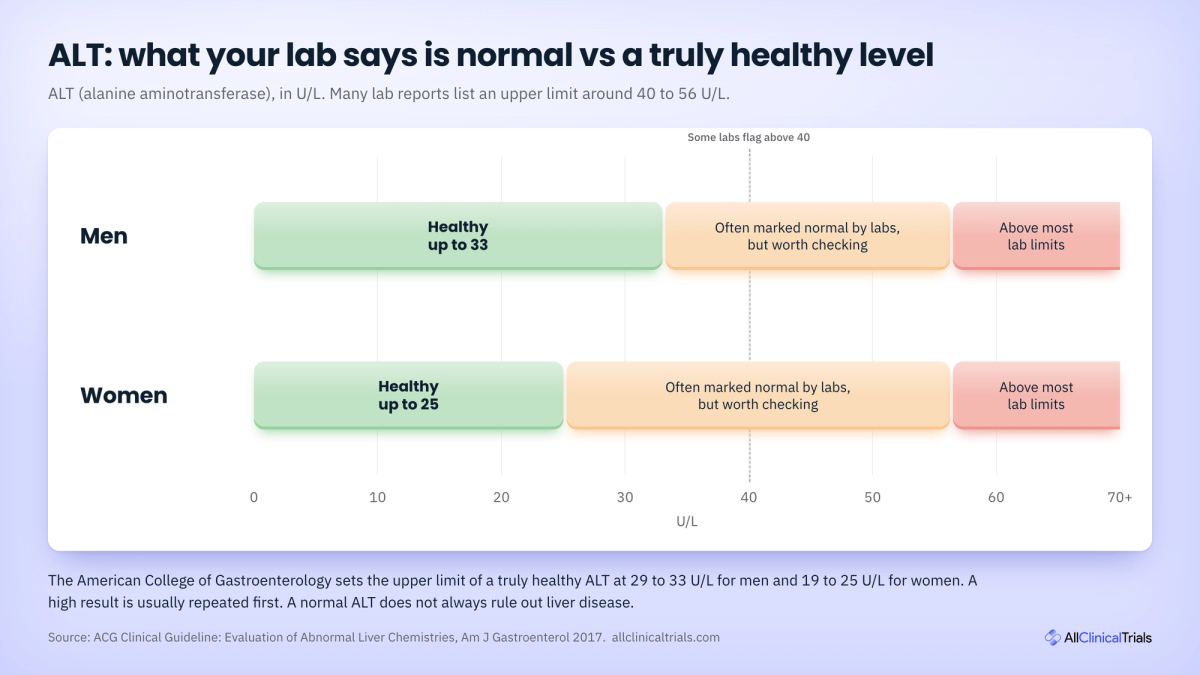
A truly healthy ALT is lower than the upper limit many lab reports show. Source: ACG Clinical Guideline, 2017.
What causes high ALT
Fatty liver disease. The most common cause of a mildly raised ALT in otherwise healthy adults is metabolic dysfunction associated steatotic liver disease, or MASLD, formerly called non alcoholic fatty liver disease. It is closely linked to excess weight, type 2 diabetes, high cholesterol, and high blood pressure, and it often causes no symptoms for years.

Our guide to fatty liver treatment explains it in more detail.
Alcohol. Regular heavy drinking damages liver cells. In alcohol related liver disease, AST is often higher than ALT, a pattern doctors look for.
Medicines and supplements. Many common medicines, including some pain relievers, antibiotics, statins, and seizure medicines, can raise ALT, and so can herbal and dietary supplements. Guidelines specifically advise doctors to ask about everything you take, including products bought without a prescription.
Viral hepatitis. Hepatitis B and C can raise ALT for years without symptoms, and both are treatable; see our hepatitis C page.
Other causes. Hard exercise and muscle injury, thyroid problems, celiac disease, iron overload, and less common autoimmune and genetic liver conditions can also raise ALT.
What happens next after a high ALT
The first step is usually simple: repeat the test. Guidelines advise confirming that the result is truly abnormal before starting a full evaluation, because ALT can rise briefly after intense exercise, illness, or a new medicine. If it stays high, your doctor will usually review your medicines, supplements, and alcohol use, check for hepatitis B and C, and look at your weight, blood sugar, and cholesterol. An ultrasound can show fat in the liver, and a FibroScan or a blood based score can estimate whether there is scarring.

Our guide to FibroScan results explains what those numbers mean.
How serious is a high ALT?
A mildly raised ALT is common and usually not an emergency, but it is worth following up rather than ignoring, because guidelines note that persistently elevated ALT is linked with a higher risk of liver related problems over time. Very high levels, many times the upper limit, or a raised ALT with yellowing of the skin or eyes, dark urine, abdominal pain, or confusion need prompt medical attention.
Can you lower ALT?
The level falls when the cause is treated. For fatty liver disease, gradual weight loss, regular physical activity, limiting alcohol, and good control of diabetes and cholesterol can bring ALT down and, over time, reduce liver fat and even early scarring. Stopping a medicine or supplement that irritates the liver often brings ALT back to normal, but never stop a prescribed medicine without talking to your doctor.

Our guide to whether fatty liver can be reversed covers this in more detail.
When high ALT points to fatty liver disease, and why research matters
For many people, a raised ALT is the first sign of fatty liver disease, sometimes years before any symptoms. Most people with fatty liver never develop serious liver damage, but a minority develop inflammation and scarring, called MASH, which can progress to cirrhosis. The first medicines specifically for MASH were approved only recently, and many more are being tested, because the condition is common and treatment options are still limited. Studies typically enroll adults with diagnosed fatty liver disease or MASH, often with overweight and conditions such as type 2 diabetes, high blood pressure, or high cholesterol.
How to find a fatty liver study
AllClinicalTrials.com lists liver disease studies recruiting across the US and Canada, and you can filter by location. Right now that includes a group of studies for adults with diagnosed fatty liver disease or MASH who are overweight and have a related condition such as type 2 diabetes, high blood pressure, or high cholesterol. More studies are on our fatty liver clinical trials and cirrhosis pages. The application takes about 5 minutes, and nothing is decided until you have gone through informed consent.
Common questions
What is a normal ALT level? Lab reports often show upper limits around 40 to 56 U/L, but the American College of Gastroenterology defines a true healthy normal ALT as 29 to 33 U/L for men and 19 to 25 U/L for women.
What is the most common cause of high ALT? In otherwise healthy adults, fatty liver disease is the most common cause of a mildly raised ALT. Alcohol, medicines, supplements, and viral hepatitis are other frequent causes.
Should I worry about a slightly high ALT? It is usually not urgent, but it is worth following up. The first step is often a repeat test, then a review of medicines, alcohol, and risk factors for fatty liver.
Can exercise raise ALT? Yes. Strenuous exercise and muscle injury can raise ALT temporarily, which is one reason a high result is usually repeated.
Can medicines cause high ALT? Yes. Many prescription medicines, over the counter pain relievers, and herbal or dietary supplements can raise ALT. Tell your doctor everything you take, and do not stop a prescribed medicine on your own.
How can I lower my ALT? By treating the cause. For fatty liver, gradual weight loss, regular activity, limiting alcohol, and controlling blood sugar and cholesterol usually bring ALT down over time.
Does a normal ALT mean my liver is healthy? Not always. Some people with significant liver scarring have normal ALT, which is why doctors also use ultrasound, FibroScan, or blood based scores when risk factors are present.
Do liver trial participants get paid? Some studies offer compensation for time and travel, and study related care is typically provided at no cost to participants. Compensation varies by trial and is always described during the informed consent process before you agree to anything.